Byte-Sized Overview
Federal agent Jack Bauer has one day to stop a national catastrophe. Unfortunately, the terrorists have brought backup, the government has brought a conspiracy and the Counter Terrorist Unit has brought an internal security system apparently purchased from somebody in the car park.
24 turns each season into a single day. Every episode covers approximately one hour in real time, with digital clocks marking the movement towards the next disaster. Jack begins as director of CTU’s Los Angeles field office, attempting to prevent the assassination of presidential candidate David Palmer while rescuing his kidnapped wife and daughter. By midnight, the apparent assassination plot has become a personal revenge operation and somebody inside CTU has revealed a betrayal capable of reshaping the entire series.
Later days involve nuclear weapons, weaponised viruses, attacks on presidents, government corruption, military contractors, nerve gas, compromised drones and enough moles to make every CTU induction course an act of administrative optimism. Jack repeatedly saves lives by violating orders, laws, diplomatic agreements and most accepted approaches to workplace communication. Each success costs him something: colleagues, relationships, freedom, health and any realistic prospect of taking his family somewhere quiet.
The format creates extraordinary momentum. Split screens show simultaneous events, phone calls connect several crises and the ticking clock turns even a routine drive across Los Angeles into suspense. Kiefer Sutherland makes Jack frighteningly decisive without losing sight of the damaged man underneath. Mary Lynn Rajskub’s Chloe O’Brian becomes his indispensable ally, while presidents David Palmer and Allison Taylor demonstrate how political authority can either resist or surrender to the pressure surrounding it.
Across eight original seasons, the television film 24: Redemption and the London-set 24: Live Another Day, the series combines action thriller, political drama, family tragedy and a prolonged argument about whether saving thousands can justify destroying one person. It is gripping, frequently preposterous and ethically combustible. It also makes silence after a stopped clock feel more threatening than most programmes can manage with an explosion.
24 Transmission Details
- Show: 24, including the eight-season original series and the continuation 24: Live Another Day. The television film 24: Redemption connects days six and seven.
- Years Active: 2001-2010 for the original run; 24: Redemption aired in 2008; Live Another Day followed in 2014.
- Seasons: 8 original seasons of 24 episodes, plus the 12-episode Live Another Day, commonly treated as season nine.
- Episodes: 204 Jack Bauer episodes in total: 192 from the original run and 12 from Live Another Day. Redemption is a separate feature-length television film.
- Typical Running Time: Approximately 43-46 minutes. Each regular episode represents one hour of story time, with commercial breaks occupying the remaining minutes in the original broadcast hour.
- Original US Broadcaster: Fox.
- Original UK Broadcasters: BBC Two carried the first two seasons, with supplementary material and repeat scheduling across the BBC’s digital channels. Sky One acquired the series from season three and later broadcast Redemption and Live Another Day.
- Where to Watch:
- UK: All nine Jack Bauer seasons are available through Disney+, ITVX Premium and free with adverts on ITVX at the time of writing. Digital purchases are also offered by Apple TV Store and Amazon Video.
- US: The Jack Bauer series and Live Another Day are available through Hulu, with digital purchase options varying by platform.
- Creators: Joel Surnow and Robert Cochran.
- Key Executive Producers: Joel Surnow, Robert Cochran, Brian Grazer, Howard Gordon, Kiefer Sutherland, Evan Katz, Manny Coto, David Fury and Jon Cassar, with responsibilities changing across the run.
- Main Cast: Kiefer Sutherland, Leslie Hope, Elisha Cuthbert, Sarah Clarke, Dennis Haysbert, Carlos Bernard, Reiko Aylesworth, James Morrison, Kim Raver, Mary Lynn Rajskub, William Devane, Cherry Jones, Annie Wersching and Gregory Itzin.
- Theme and Score: Sean Callery, whose electronic pulse, percussion and mournful character themes became inseparable from the clock.
- Production Companies: Imagine Television, 20th Century Fox Television, Real Time Productions and, during later seasons, Teakwood Lane Productions.
- Primary Settings: Los Angeles for most of the original run, Washington, D.C. for day seven, New York City for day eight and London for Live Another Day. Redemption divides its story between the fictional African nation of Sangala and Washington.
- Related Productions: 24: Legacy, the 2017 spin-off led by Corey Hawkins as Eric Carter, with Carlos Bernard returning as Tony Almeida. Indian and Japanese adaptations also recreated the real-time format for local versions.
- Sub-Genre Tags: Action thriller, political thriller, espionage, counter-terrorism, conspiracy drama, real-time television, techno-thriller, serial drama, crime drama and an unusually aggressive objection to clocks reaching the hour.
24 Signal Strength (aka: Is It Worth Your Binge?)
Yes, but 24 is less a relaxed binge than a voluntary transfer into federal emergency management. Watching one episode is easy. Stopping after one is where the system fails.
The first season remains the ideal starting point because its scale is personal before it becomes national. Jack must protect presidential candidate David Palmer, but he is also trying to rebuild his marriage to Teri and repair his relationship with teenage daughter Kim. Their abduction forces the two parts of his life together. He cannot simply follow CTU procedure because his family will be killed; he cannot simply save his family because a presidential assassination could destabilise the country. The format turns that conflict into pressure rather than backstory.
Real time is the programme’s great formal invention. Events unfold simultaneously, and the split screen reminds viewers that a character making coffee may be occupying the same minute in which somebody else is planting a bomb. Travel times are elastic and Los Angeles traffic occasionally demonstrates patriotic cooperation, but the illusion is remarkably persuasive. The clock does not merely announce structure. It creates the sensation that every decision has consumed time another problem can use.
Kiefer Sutherland gives the premise its durability. Jack is not an invulnerable action hero, even when the scripts require startling physical endurance. He becomes exhausted, wounded, addicted, traumatised and emotionally isolated. Sutherland’s controlled voice makes every order sound practical, while the sudden eruptions of violence reveal how close Jack always is to the edge. His most memorable moments are often quiet: preparing to die in an aircraft carrying a nuclear bomb, breaking down after an impossible day or saying goodbye to Chloe from a distance because remaining near anyone has become dangerous.
The supporting cast prevents the series becoming a one-man emergency. Dennis Haysbert’s David Palmer gives the early years moral and political weight. Carlos Bernard’s Tony Almeida develops from suspicious colleague to loyal friend, widower and antagonist. Reiko Aylesworth’s Michelle Dessler grows into one of CTU’s finest leaders. James Morrison makes Bill Buchanan the rare supervisor capable of trusting Jack without confusing trust with obedience. Kim Raver’s Audrey Raines becomes Jack’s clearest chance at a life beyond CTU, which naturally places her directly in the path of the narrative machinery.
Mary Lynn Rajskub is essential. Chloe O’Brian arrives in season three as an abrasive analyst with limited interest in social comfort and an extraordinary ability to recognise when Jack is right before the official chain of command has finished being wrong. Her friendship with him becomes the show’s most durable relationship. Chloe argues, disobeys, hacks systems, covers tracks and occasionally points a weapon with the expression of someone whose job description definitely did not mention fieldwork.
The first five seasons provide the strongest sustained run. Day one offers the cleanest emotional story and one of television’s great finale shocks. Day two expands the threat without abandoning character. Day three is darker and less even, but its virus story, Jack’s addiction and Ryan Chappelle’s execution produce several of the series’ most punishing hours. Day four is a relentless chain of escalating attacks, while day five is widely and reasonably regarded as the peak. It opens by destroying Jack’s hidden peace, turns President Charles Logan into a magnificent study of cowardice and conspiracy, and gives almost every regular something urgent to lose.
Day six is the obvious difficulty. A nuclear bomb detonates in Valencia early enough to suggest extraordinary consequences, but the season then disperses into family revelations, repeated device hunts and an increasingly crowded conspiracy. Jack’s father and brother are connected to the plot, which makes his personal history feel less discovered than retrofitted by a writers’ room running on the same clock. There are strong performances and a haunting final scene, but the season demonstrates what happens when escalation becomes a substitute for development.
Redemption resets the series effectively. Jack is in Sangala, helping his friend Carl Benton protect children from recruitment by a military coup. The African setting broadens the world and strips Jack of CTU resources, while Allison Taylor’s inauguration prepares the political landscape for day seven. The film’s fictional treatment of African conflict is simplified, but its quieter Jack and moral clarity provide useful breathing space.
Day seven is a substantial recovery. CTU has been dissolved, Jack faces a Senate hearing and Tony appears to have returned from death as a terrorist. The story moves to Washington, introduces FBI agent Renee Walker and places Allison Taylor in the White House. Its later revelation that Tony has his own revenge operation divides viewers, but the season regains the urgency, political friction and emotional cost that day six had diluted.
Day eight begins unevenly in a newly constructed New York CTU, then becomes ferocious after Renee’s death. Jack’s revenge campaign is gripping television and an intentional moral collapse. He is no longer simply breaking rules to prevent an attack. He is hunting the people responsible while President Taylor compromises herself to preserve a peace agreement. The distinction matters. The show does not pretend Jack’s actions are clean merely because viewers understand his grief.
Live Another Day is a leaner, faster return. Twelve episodes cover selected hours in London, with a time jump completing the day. Yvonne Strahovski’s Kate Morgan proves an excellent counterpart to Jack, William Devane gives President Heller tragic dignity and the drone plot uses modern anxieties without losing the series’ familiar rhythm. The final run is brutal, particularly for Audrey, and leaves Jack in Russian custody. It is emotionally effective and deliberately unresolved.
The series has serious weaknesses. Torture is used repeatedly as an effective shortcut, sometimes after institutional objections have been presented mainly so Jack can be proved right. The programme occasionally acknowledges false confessions, damaged agents and moral corrosion, but its suspense machinery normally rewards coercion. Muslim characters and foreign threats are treated with more nuance than the show’s reputation suggests in some seasons, yet other stories rely on stereotypes or invite viewers to fear communities before revealing the individual conspirators within them.
Female characters are frequently excellent and frequently punished. Nina, Michelle, Chloe, Renee, Audrey, Teri, Kim, Martha Logan and Allison Taylor all receive substantial material, but kidnapping, sexual threat, trauma and sudden death recur as ways to increase Jack’s pain. The show can create formidable women and then feed them into the same mechanism that powers its protagonist.
Even with those reservations, 24 remains enormously effective. The cliffhangers are constructed with ruthless skill, the action is clear, the music accelerates the pulse and the best political stories understand that compromised institutions can be as dangerous as outside attackers. Watch the first hour and see whether you can leave the next one until tomorrow. The clock is confident you cannot.
Vibe Check
- Tone: Urgent, paranoid and increasingly tragic, with occasional warmth scheduled between security breaches.
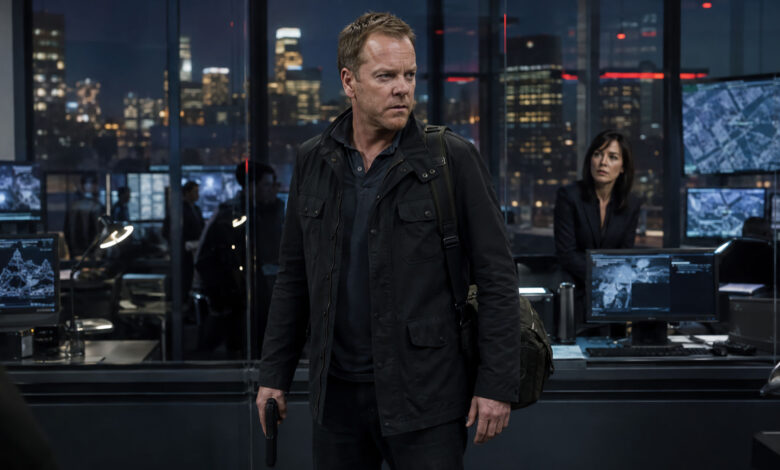
- Visuals: Handheld cameras, surveillance feeds, split screens, fluorescent operations rooms and Los Angeles seen primarily through rapidly moving vehicles.
- Bingeability: Dangerously high. Every episode ends as though the next 60 seconds require immediate federal attention.
- Action Level: Extreme. Shoot-outs, pursuits, explosions, infiltrations and a statistically improbable number of helicopter arrivals.
- Conspiracy Level: Terminal. If three senior officials enter a room, one has been compromised and another has probably phoned Jack to warn him.
- Political Level: High, with presidential decisions, cabinet pressure, intelligence manipulation and constitutional procedure conducted at the speed of a hostage rescue.
- Torture Level: Frequent, controversial and central to any honest assessment of the series.
- Family Stress Level: Jack’s relatives should receive automatic entry to a witness-protection programme at birth.
- Technology Level: Impressive for its period, provided nobody asks why CTU keeps reconnecting the same vulnerable server.
- Clock Anxiety: Permanent. The silent clock is worse.
Spoiler Mode: Plot Brief for Pub Chat
Major spoilers begin here for all eight original seasons, 24: Redemption and Live Another Day. This includes principal deaths, presidential conspiracies and the current location of Jack Bauer. The following section has no secure perimeter.
Day one begins at midnight on the day of California’s presidential primary. Jack Bauer has recently returned home to his wife, Teri, after a separation caused partly by his affair with CTU colleague Nina Myers. Their daughter Kim slips out to meet boys and is kidnapped alongside her friend Janet York. At the same time, CTU learns that an attempt will be made on Senator David Palmer, a leading presidential candidate and potentially the first Black president of the United States.
Jack discovers that the conspirators have people inside CTU. His family is being used to force him into participating in Palmer’s assassination. The operation is led by Ira Gaines, but Gaines is only the first layer. After Jack rescues Teri and Kim and kills Gaines, the threat continues through the Drazen family. Years earlier, Jack led a covert mission called Operation Nightfall, authorised through Palmer’s national-security committee, which was believed to have killed Serbian war criminal Victor Drazen and members of his family. Victor survived, and his sons Andre and Alexis now want Jack and Palmer destroyed.
Palmer faces a parallel family crisis. His daughter Nicole had been raped, and his son Keith killed the attacker while protecting her. Palmer’s wife Sherry helped conceal the death and manipulates events to protect his campaign. David refuses to let ambition erase accountability, beginning a political journey defined by the conflict between principle and power.
The final betrayal comes from Nina. Jack has trusted her throughout the day, despite their complicated history, but she is the second mole. Nina tells Jack that Kim has been killed, provoking him into a furious assault on the Drazens. He kills Victor and Andre, then discovers Kim is alive. Nina attempts to escape and murders Teri, who has overheard evidence of her treachery. Jack finds his pregnant wife dead inside CTU as the first day ends. The closing image transforms the series from thriller into tragedy.
Day two begins 18 months later. Jack has left CTU and is estranged from Kim, but David Palmer, now president, recalls him when intelligence reveals that a nuclear bomb will detonate in Los Angeles that day. Jack goes undercover among domestic extremists while CTU searches for terrorist Syed Ali. George Mason, now leading CTU, is exposed to lethal radiation while investigating a contaminated site and continues working with only hours to live.
Kim spends much of the day trying to protect a child from an abusive father, an increasingly detached storyline that also includes a cougar and provides viewers with several opportunities to wonder whether the nuclear device might be narratively simpler. The main crisis tightens around a recording that appears to prove three Middle Eastern governments supported the bomb plot. Palmer resists military retaliation while officials around him insist the evidence is sufficient.
The bomb cannot be disarmed and must be flown into the Mojave Desert. Jack intends to pilot the aircraft and die with it, saying goodbye to Kim by telephone. Mason secretly boards the plane, reveals that he has nothing left to lose and forces Jack to parachute to safety. He completes the mission and dies in the nuclear explosion, turning an abrasive bureaucrat into one of the show’s most affecting heroes.
Jack proves the recording was fabricated by a group of oil executives seeking to provoke a war and increase profits. Peter Kingsley directs the conspiracy and is eventually killed after Sherry Palmer helps expose him. David prevents the retaliatory attack, but the day ends with assassin Mandy shaking his hand and transferring a biological agent to him. Palmer collapses as the clock reaches the end.
Day three occurs three years later. Palmer is seeking re-election, Kim works at CTU and Jack has developed a heroin addiction after an undercover operation with the Salazar drug cartel. A dead body infected with a weaponised virus is left outside a health facility, and the government is told that further releases will follow unless imprisoned cartel leader Ramon Salazar is freed.
Jack breaks Ramon out, apparently betraying CTU, but the escape is part of a deeper operation. He has been working to return to the Salazars and intercept the virus before it reaches another buyer. Nina reappears as one of the bidders, forcing Jack to confront Teri’s murderer while the pathogen moves through several hands. Nina later attempts another escape inside CTU, and Jack shoots her after she reaches for a weapon, ending their long conflict without restoring anything she took from him.
The true architect is former British intelligence officer Stephen Saunders, who uses the virus to force the government into compliance. One vial is released in the Chandler Plaza Hotel. Michelle Dessler, now married to Tony, seals the building and tells the trapped guests they have been exposed. She is infected but ultimately survives because her body is resistant. Many others die as the hotel becomes one of the programme’s bleakest contained stories.
Saunders demands that Jack execute CTU regional director Ryan Chappelle, who is close to tracing his finances. Palmer has no immediate way to stop the wider attacks and authorises the sacrifice. Jack takes Chappelle to a railway yard, gives him a chance to prepare and shoots him. The scene is horrifying because nobody is pretending the act is anything except murder committed under coercion.
Tony jeopardises the operation when Saunders kidnaps Michelle, choosing his wife over protocol. Saunders is captured, but a final vial is attached to Chase Edmunds, Kim’s partner. Jack cuts off Chase’s hand to remove the device before it releases the virus. The day ends after the threat has been contained. Alone in his vehicle, Jack finally breaks down, the accumulated fear and violence arriving after there is no longer an operation to hold him upright.
Day four begins 18 months later. Jack works for Secretary of Defense James Heller and is in a relationship with Heller’s daughter Audrey Raines. Terrorist leader Habib Marwan launches a sequence of interconnected attacks. A train derailment allows his group to steal technology, while Heller and Audrey are kidnapped for a public execution. Jack rescues them, but the attack is only the opening move.
Marwan’s network causes meltdowns at nuclear power stations, steals a stealth fighter and uses it to shoot down Air Force One. President John Keeler is incapacitated, bringing Vice President Charles Logan into office. Logan lacks the judgement and courage required by the crisis and secretly asks former president David Palmer to guide him. Palmer returns without formal authority but immediately provides the steadiness the White House has been missing.
Jack leads an unauthorised raid on the Chinese consulate to retrieve a scientist with information about Marwan. The Chinese consul is accidentally killed by friendly fire, and China identifies CTU agent Howard Bern as one of the attackers. To prevent Jack being surrendered and exposing American operations, Palmer, Logan, Tony, Michelle and Chloe help stage his death. Jack stops Marwan’s final nuclear missile, says goodbye to Audrey from afar and walks away under a new identity. Tony and Michelle leave CTU together, apparently securing the future the programme has been threatening to deny them.
Day five destroys that peace within minutes. Eighteen months later, David Palmer is assassinated, Michelle is killed by a car bomb and Tony is critically wounded. Chloe escapes an attacker. The murders target everyone who knew Jack was alive, forcing him to emerge from hiding. Evidence points towards former CTU agent Christopher Henderson, Jack’s old mentor, and a plot involving Sentox nerve gas.
The gas is intended for use against Russian separatists, but canisters are released in Los Angeles. Terrorists infiltrate CTU and release Sentox into the ventilation system. Staff members seal themselves inside protected rooms while Edgar Stiles remains exposed on the operations floor. Chloe watches him die through the glass, and the usual ticking clock is replaced by silence. The death lands because Edgar is not a field agent making a calculated sacrifice. He is an ordinary analyst caught by a failure in the building that was supposed to protect him.
President Logan initially appears weak and overwhelmed. The deeper revelation is worse: he is involved in the conspiracy. His advisers intended to use the gas to reshape Russian policy and protect American interests, but the operation escaped their control. First Lady Martha Logan suspects her husband and risks herself to expose him, aided by Secret Service agent Aaron Pierce and presidential aide Mike Novick.
Tony awakens and tries to kill Henderson in revenge for Michelle. Henderson injects him with a drug, and Tony appears to die. Jack eventually captures Logan and attempts to force a confession. The president refuses, unaware that Jack has planted a recording device. During a private confrontation with Martha, Logan admits enough to expose himself. He is taken into custody immediately after participating in Palmer’s funeral arrangements, collapsing beneath the legacy of the man he helped murder.
Jack has no time to absorb the victory. Chinese agents abduct him, revealing that Beijing has not forgotten the consulate raid. The season ends with Jack beaten aboard a cargo ship bound for China, his existence once again converted into a diplomatic problem.
Day six begins 20 months later. The United States has suffered repeated terrorist attacks, and Jack is returned by China because terrorist Abu Fayed demands him in exchange for information. The government intends to surrender Jack for execution. Jack discovers Fayed is the real architect of the attacks and escapes, but not before the physical and psychological damage of his imprisonment becomes clear.
Fayed possesses suitcase nuclear weapons. Former CTU operative Curtis Manning refuses to accept the cooperation of a former terrorist and threatens him; Jack shoots Curtis to protect the operation. Moments later, a nuclear device detonates in Valencia. The sequence leaves Jack devastated and establishes an enormous threat, but the season becomes increasingly entangled in the Bauer family. Jack’s brother Graem, previously connected to the day-five conspiracy, and their father Phillip are involved in the nuclear plot. Graem dies after Phillip secretly administers a fatal dose during interrogation.
Jack ultimately kills Fayed in a brutal fight and prevents further detonations. Chinese agent Cheng Zhi then uses Audrey, who was believed dead, to obtain Russian technology that could provoke an international crisis. Jack recovers the device, but Audrey has been traumatised by captivity and torture. James Heller tells Jack that his presence destroys everyone he loves. In the final scene, Jack stands outside Heller’s home overlooking the ocean, considering the cost of his life before disappearing again.
24: Redemption finds Jack in the fictional African country of Sangala. He helps former special-forces colleague Carl Benton run a school for children while avoiding an American subpoena. General Juma’s forces are recruiting child soldiers, and Colonel Dubaku attacks the school. Benton sacrifices himself while Jack leads the children towards the US embassy. To secure their evacuation, Jack surrenders to American authorities just as Allison Taylor is inaugurated as president. The film also establishes businessman Jonas Hodges and the domestic support network behind Juma’s coup.
Day seven moves to Washington, D.C. CTU has been disbanded after investigations into its methods, and Jack appears before a Senate committee chaired by Blaine Mayer. The hearing is interrupted when the FBI needs his expertise. Tony Almeida is alive and appears to be working with terrorists who can penetrate the country’s infrastructure through a device linked to the CIP firewall.
Tony’s apparent villainy is part of an undercover operation with Bill Buchanan and Chloe. They are trying to expose a conspiracy reaching beyond official agencies. FBI agent Renee Walker becomes Jack’s reluctant partner and gradually begins adopting his willingness to cross legal and moral lines. President Taylor faces both the Sangalan crisis and betrayal inside her own administration.
General Juma attacks the White House and takes the president hostage. Bill sacrifices himself by triggering an explosion that allows Jack to stop the assault. The conspiracy then leads to Starkwood, a private military company led by Jonas Hodges, which possesses a weaponised pathogen. Jack is exposed and begins deteriorating. Kim returns and ultimately provides stem cells that can save him.
Tony reveals his true objective after helping contain Starkwood. He has been using both sides to reach Alan Wilson, a figure connected to the conspiracy that killed Michelle and their unborn son. Tony intends to detonate a bomb that will kill Wilson and frame him publicly, sacrificing innocent people to complete his revenge. Jack stops him. Renee later confronts Wilson and is left facing the same choice between lawful justice and personal vengeance that consumed Tony.
Day eight opens in New York City. Jack has recovered and plans to return to Los Angeles with Kim and his granddaughter, but an informant brings warning of a plot against Kamistani president Omar Hassan. Hassan is negotiating a peace agreement with President Taylor and Russian president Yuri Suvarov. Jack reluctantly assists the newly rebuilt CTU, where Brian Hastings is director and former undercover operative Renee Walker is brought back to infiltrate the Russian criminal network involved.
Hassan is captured despite the team’s efforts. Jack follows a live transmission that appears to show Hassan still alive, only to discover the feed is a recording and the president has already been executed. The peace process continues under pressure. CTU analyst Dana Walsh is exposed as a Russian agent, while the conspiracy reaches into Suvarov’s government.
Jack and Renee finally allow themselves a moment of hope, but Russian assassin Pavel Tokarev shoots her. She dies in hospital. Jack learns that the Russian government ordered the killing and begins a revenge campaign. He captures and executes Dana after extracting evidence, kills Novakovich and his guards, and records a message explaining his actions. He nearly assassinates Suvarov but is stopped by Chloe, who convinces him that exposing the conspiracy matters more than immediate revenge.
Charles Logan has returned as an adviser and encourages President Taylor to conceal Russian responsibility in order to preserve the peace agreement. Taylor gradually permits blackmail, illegal detention and attempted murder. At the signing ceremony, she finally recognises what she has become, refuses to sign and announces that she will expose the conspiracy and accept the consequences. Logan shoots himself after realising the scheme has collapsed, but survives with severe injuries.
Taylor warns Jack that both the United States and Russia will pursue him. From a surveillance drone, he says goodbye to Chloe and asks her to protect Kim. The original series ends with Jack fleeing, while Chloe watches his image disappear from the screen.
Live Another Day begins four years later in London. Jack resurfaces while tracking a plan to assassinate President James Heller, who is negotiating a drone treaty with the British government. Chloe now works with the hacktivist group Open Cell after suffering her own losses and becoming alienated from the state she once served. CIA agent Kate Morgan realises Jack has deliberately allowed himself to be captured as part of a larger operation.
Margot Al-Harazi gains control of American drones and threatens London. Heller, who is experiencing the early stages of Alzheimer’s disease, agrees to surrender himself at Wembley Stadium to stop further attacks. Jack and Chloe secretly remove him before the strike and loop surveillance footage, making Margot believe the president is dead. Jack later captures Margot and throws her from a window after securing the system, a decision indicating that eight previous days have not increased his interest in formal arrest procedures.
The second threat comes from Cheng Zhi, the Chinese operative responsible for Audrey’s earlier captivity. Cheng uses the stolen system to make an American submarine attack a Chinese carrier, pushing the countries towards war. Jack proves the attack was fabricated and storms Cheng’s ship. Audrey is killed by a sniper during the operation. Jack responds with a silent rampage, captures Cheng and beheads him after confirming his identity to the authorities.
Chloe is then taken by the Russians. Jack exchanges himself for her safety and is flown towards Moscow. Heller prepares to return home with Audrey’s body, telling the British prime minister that his disease will eventually erase even the memory that he had a daughter. The clock stops with Jack in Russian custody, Chloe alive and the cost of another saved day almost impossible to call victory.
24 Character Shout-Outs
- Jack Bauer: Counter-terrorism agent, reluctant fugitive and human embodiment of an emergency override. Jack saves millions while steadily losing the life for which saving them was supposed to matter.
- Chloe O’Brian: Brilliant analyst, instinctive contrarian and Jack’s most loyal friend. If Chloe says the firewall is compromised, the correct response is not to suspend her access again.
- David Palmer: Senator, president and the programme’s moral centre. Palmer’s authority comes from deliberation rather than volume, making his assassination one of the series’ most consequential losses.
- Tony Almeida: Agent, director, widower, apparent corpse, undercover operative and avenger. Tony’s personnel file presumably requires its own secure facility.
- Michelle Dessler: Exceptionally capable CTU leader whose composure at the infected hotel defines courage without removing fear.
- Kim Bauer: Jack’s daughter and the person most entitled to reject any invitation beginning with “I need your help for one hour.”
- Teri Bauer: Jack’s wife, whose murder ensures the first day never truly ends for him.
- Nina Myers: Intelligent, controlled and devastatingly effective as the mole hidden inside Jack’s trust.
- Bill Buchanan: Calm leader, loyal ally and rare senior official able to assess Jack’s judgement without either worshipping or automatically arresting him.
- Audrey Raines: Policy specialist, survivor and Jack’s clearest connection to an ordinary emotional life. The series treats that possibility with its customary gentleness, which is to say none.
- Renee Walker: FBI agent whose partnership with Jack becomes a study of influence, trauma and the cost of adopting his methods.
- Allison Taylor: Principled president repeatedly tested by family, war and political expediency. Her eventual confession is painful precisely because she understands how far she has fallen.
- Charles Logan: Coward, conspirator and one of television’s finest political villains. Logan can make the act of adjusting his tie look like an indictable offence.
- Martha Logan: First lady, truth-teller and the person most capable of seeing through her husband’s performance because she has been trapped behind it.
- George Mason: Irritating administrator who uses his final hours to save Los Angeles, proving redemption can arrive with radiation sickness and access to an aircraft.
24 Memorable Moments
- Jack discovering Teri’s body inside CTU while the first day ends without a sound of triumph.
- Nina’s exposure as the mole after an entire season spent inside Jack’s confidence.
- George Mason taking control of the aircraft carrying the nuclear bomb and giving Jack the chance to return to Kim.
- President Palmer resisting a rush to war after learning that the intelligence recording has been fabricated.
- Jack executing Ryan Chappelle because Saunders has made one man’s death the price of preventing many more.
- Michelle sealing the doors of the infected Chandler Plaza Hotel and remaining with the people trapped inside.
- Jack cutting off Chase’s hand to remove the virus device, an unusually severe solution even by CTU standards.
- Air Force One being shot down during Marwan’s day-long chain of attacks.
- David Palmer returning to guide the catastrophically unprepared President Logan.
- The opening minutes of day five killing Palmer and Michelle and forcing Jack out of hiding.
- Edgar seeing Chloe through the sealed glass as Sentox gas fills CTU, followed by the silent clock.
- Martha and Jack manoeuvring Logan into recording the confession that destroys his presidency.
- A nuclear bomb detonating in Valencia early in day six, leaving the series with 20 hours in which “the situation has escalated” is no longer useful information.
- Bill Buchanan sacrificing himself during Juma’s assault on the White House.
- Tony revealing that his return from death has become a revenge mission for Michelle and their unborn child.
- Renee dying moments after she and Jack appear to have found a future together.
- Jack placing his recorded message beside Dana before continuing his assault on the Russian conspiracy.
- President Taylor abandoning the peace agreement and choosing to confess her own crimes.
- Heller walking towards an apparently certain death at Wembley while Jack prepares a deception around the drone strike.
- Jack’s silent reaction to Audrey’s death, followed by an operation that makes his previous use of restraint look positively diplomatic.
- Chloe watching Jack surrender to the Russians in exchange for her life.
Performance Highlights
- Kiefer Sutherland: Makes Jack’s decisiveness exciting and his damage cumulative. The whisper, the sudden fury and the exhausted stillness are all parts of the same man, earning Sutherland the 2006 Emmy for Outstanding Lead Actor.
- Mary Lynn Rajskub: Turns Chloe’s bluntness into a complete emotional language. Her loyalty is never passive, and her final scenes with Jack carry more history than most conventional television romances.
- Dennis Haysbert: Gives David Palmer moral authority without making him infallible. His measured delivery slows the series just enough for political choices to acquire weight.
- Carlos Bernard: Handles one of the show’s most extreme character journeys with conviction. Tony’s warmth, bitterness, divided loyalties and grief remain recognisably connected even when the plot has declared him dead and reconsidered.
- Reiko Aylesworth: Builds Michelle from controlled analyst into fearless field leader. Her hotel storyline is among the clearest demonstrations that courage on 24 does not belong only to Jack.
- Gregory Itzin: Creates a wonderfully weak, dangerous president in Charles Logan. His Emmy-nominated performance makes cowardice active rather than merely pathetic.
- Jean Smart: Gives Martha Logan volatility, intelligence and bruising moral clarity. Her scenes with Itzin turn a presidential marriage into the fifth season’s most compelling interrogation room.
- Cherry Jones: Finds the steel and uncertainty inside Allison Taylor, winning an Emmy while showing how a principled leader can be compromised one apparently necessary decision at a time.
- Annie Wersching: Makes Renee’s transformation believable and painful. She can match Jack’s intensity while preserving the sense that every crossed line leaves a mark.
- James Morrison: Gives Bill Buchanan an understated decency that becomes increasingly rare within the series. His authority is strongest when delivered quietly.
- Kim Raver: Ensures Audrey is more than Jack’s endangered love interest. Her political expertise, resilience and emotional directness make her losses feel especially cruel.
- William Devane: Brings dry intelligence to James Heller and devastating restraint to Live Another Day, particularly as Heller confronts the future erasure of his daughter from memory.
- Sarah Clarke: Plays Nina with such credible steadiness that the first-season revelation remains shocking even after the series has taught viewers to suspect everybody with a security badge.
Skull Face’s Take
24 begins with a clock and spends the next nine days demonstrating how much damage can occur before it changes again. The premise is both gimmick and governing principle. Real time shapes the plots, the performances, the editing and the viewer’s body. Every phone call consumes seconds. Every split screen suggests a disaster approaching from somewhere else. Every advert break arrives with four hard beeps and the unreasonable feeling that failing to continue immediately may endanger national security.
The miracle is that the mechanism produces emotion as well as momentum. Jack is compelling because he pays for his effectiveness. Teri’s death, Kim’s estrangement, Audrey’s suffering, Renee’s murder and Chloe’s sacrifices do not disappear when the next threat arrives. The series sometimes manipulates those losses too aggressively, but Sutherland keeps the accumulated grief present. Jack becomes more capable of surviving a crisis and less capable of imagining a life outside one.
The programme’s politics are deliberately unstable. It gives America David Palmer, an idealistic Black president written before Barack Obama’s election, then gives it Charles Logan, a weak man whose hunger for significance becomes treason. It can distrust government institutions while admiring public service, condemn corporate power while celebrating unilateral action, and show Jack’s methods as both necessary and destructive. That tension is productive when the writing allows consequences. It becomes troubling when torture supplies reliable information quickly enough to function as a technical feature.
Any modern guide has to confront that issue. 24 did not invent fictional torture, but its enormous popularity, repeated ticking deadlines and influential hero made the technique feel unusually immediate. The show occasionally depicts innocent suspects, false assumptions and damaged agents. More often, Jack inflicts pain, obtains the answer and prevents catastrophe. The dramatic equation is powerful and dangerously convenient. Enjoying the suspense does not require pretending the equation is honest.
The villains vary from memorable to temporarily moustached. Nina Myers, Charles Logan, Christopher Henderson, Stephen Saunders and Margot Al-Harazi feel personally or ideologically connected to the characters. Other conspirators arrive because a 24-episode day has discovered nine remaining hours and a secure warehouse. CTU’s mole problem becomes comic through repetition, while the frequency of presidential incapacity suggests the Cabinet should keep the Twenty-Fifth Amendment open in a browser tab.
At its peak, especially seasons one, two and five, 24 is magnificent popular television. It moves with precision, kills characters without safety rails and understands how a single compromised choice can spread through an institution. Its weaker seasons repeat threats and mistake additional conspirators for deeper plotting, but even then an outstanding episode can suddenly lock every strand together.
The best reason to watch is the relationship between Jack and Chloe. It begins in irritation and becomes absolute trust without losing the irritation. Chloe does not excuse Jack, romanticise him or require him to become pleasant. She sees what he can do, understands what it costs and continues helping when the official system has abandoned both of them. Their final exchange in London is the true emotional conclusion of the series so far.
Start at midnight. Keep the remote nearby, the phone charged and the following day suspiciously free. 24 is not flawless, subtle or remotely calming. It is, however, one of television’s great propulsion systems, and once the clock begins moving it is remarkably difficult to argue with the next hour.
Why 24 Has Drama/Action Icon Potential
24 possesses an image, a sound and a structure that are recognisable before Jack Bauer appears. The yellow digital clock, the four electronic beats, the split screen and the phrase “the following takes place” form a complete dramatic language. Few action series have branded the passage of time itself.
Jack adds the human silhouette: shoulder bag, pistol, mobile telephone and a face carrying the news that diplomacy has been attempted off screen. Kiefer Sutherland’s performance makes the character more than an accumulation of confrontations. Jack’s urgency is external, but the tragedy is internal. Each saved day reduces the world in which he can safely live.
The series also changed serial television. Cliffhangers were hardly new, but 24 made them industrially precise and connected them to a season-long story designed for weekly suspense. Split screens let viewers hold several locations at once, while the real-time premise converted procedural delay into action. Its influence can be seen in later conspiracy thrillers, streaming dramas and limited series that treat an entire season as one accelerating operation.
The cultural footprint survives parody because the original grammar remains powerful. A digital clock appears, the screen divides and an audience immediately expects somebody inside government to betray somebody outside a secure room. That is icon status achieved four beeps at a time.
Deep Dive Highlights
- Joel Surnow and Robert Cochran created 24, with the real-time structure allowing each episode to represent one hour of a single day.
- Fox premiered the series on 6 November 2001. Its national-security subject arrived less than two months after the 11 September attacks, giving the programme an unintended and sometimes uncomfortable immediacy.
- The first eight seasons contain exactly 192 episodes. Live Another Day adds 12 more, bringing Jack Bauer’s episodic total to 204.
- Commercial breaks are part of the format’s illusion. Episodes run for roughly 44 minutes while the clock advances through the full broadcast hour.
- The split-screen sequences were designed to show simultaneous action and often include silent windows that remind viewers of threats waiting elsewhere.
- The silent clock is reserved for especially important deaths and endings. Removing the usual ticking sound became one of the programme’s clearest marks of respect or shock.
- Kiefer Sutherland appeared in every Jack Bauer episode and Redemption. He also served as an executive producer during the later run.
- Mary Lynn Rajskub joined as Chloe O’Brian in season three and ultimately appeared in more episodes than any character apart from Jack.
- The programme received 68 Primetime Emmy nominations and won 20. Its fifth season won Outstanding Drama Series in 2006, while Sutherland won Outstanding Lead Actor.
- Sean Callery won multiple Emmys for his music, which combines electronic urgency with character themes capable of carrying the show’s quieter grief.
- Dennis Haysbert’s David Palmer became one of American television’s most prominent fictional presidents. His candidacy was conceived years before the United States elected Barack Obama.
- BBC Two broadcast the first two seasons in the UK. Sky One acquired season three after negotiations between the BBC and Fox broke down, a move that generated considerable frustration among viewers without subscription television.
- The sixth season ended in 2007. The 2007-08 writers’ strike delayed the seventh, producing the longest gap in the original run.
- 24: Redemption was created partly to bridge that gap. Filming in South Africa allowed the series to leave Los Angeles and connect Jack’s exile to Allison Taylor’s incoming administration.
- CTU was removed as an operating institution in day seven after years of fictional investigations, security breaches and methods that would make an ordinary compliance review require protective clothing.
- Live Another Day filmed extensively in London and used locations including Wembley Stadium. Its 12 episodes cover selected hours, with a 12-hour jump in the finale preserving the full-day concept.
- Yvonne Strahovski’s Kate Morgan was positioned as an agent capable of matching Jack’s instincts without being reduced to an imitation of him.
- 24: Legacy aired in 2017 with Corey Hawkins as former Army Ranger Eric Carter. Jack does not appear, although Tony Almeida returns.
- The franchise has produced Indian and Japanese adaptations using the same real-time concept, demonstrating that CTU’s security problems travel well.
- A feature film was discussed repeatedly after the original series. By 2025, Kiefer Sutherland and Howard Gordon had publicly confirmed that a new Jack Bauer idea had been written and was in development, although no completed continuation had been formally released at the time of writing.
- The real-time promise is dramatic rather than perfectly literal. Journey times, simultaneous events and changes between broadcast edits occasionally reveal that even the clock cooperates when Jack needs to cross Los Angeles.
Legacy & Impact
24 arrived at the beginning of a major change in American television drama. Its long serial story, visual experimentation and aggressive cliffhangers helped demonstrate that network audiences would follow a plot across an entire season. The DVD box sets then revealed how naturally the format encouraged binge viewing before streaming services made that behaviour routine.
The real-time device remains its most obvious legacy. Earlier films and television programmes had experimented with compressed or continuous time, but 24 built an entire franchise around it. The clock gave writers a source of tension, editors a visual system and marketers an identity. It also created productive limitations. Characters could not disappear for weeks to reconsider their choices. Every betrayal, injury and death remained only minutes old as the next decision arrived.
Jack Bauer became an archetype of the post-9/11 action hero: capable, traumatised, suspicious of institutions and willing to cross legal boundaries to prevent catastrophe. The character’s popularity influenced later thrillers, but so did the controversy around him. Military officials, lawyers, politicians and commentators debated the programme’s depiction of torture and the false assumptions it could encourage. Few action dramas have been asked to account so publicly for the behaviour of their fictional protagonist.
The presidential stories left a different mark. David Palmer offered a dignified, intelligent vision of leadership, while Charles Logan exposed the danger of weakness combined with power. Allison Taylor’s fall showed corruption as a process of incremental compromise rather than a fixed personality. These stories allowed 24 to move beyond counter-terrorism operations and examine how fear travels upward through government.
Its technical influence is equally clear. The split screen, digital interfaces, handheld action and overlapping telephone conversations created a pace later thrillers adopted even without the real-time premise. The series proved that network television could stage extended action with cinematic ambition while maintaining the emotional continuity of recurring characters.
The show has aged unevenly. Technology dates, geopolitical assumptions shift and certain portrayals demand criticism. Yet the craft at its best remains formidable. The first-season ending still hurts, the fifth-season conspiracy still accelerates beautifully and the silent clock still communicates loss without explanation. Jack remains in Russian custody, which leaves the story open in both plot and emotion. Until somebody starts the clock again, 24 ends as it has always lived: with a crisis unresolved and another hour waiting.
Want to Go Deeper?
- Watch all nine Jack Bauer seasons on Disney+ (The simplest legal route to 204 episodes and a sudden distrust of every digital clock in the house.)
- Check current UK availability on JustWatch (Useful when streaming rights move with slightly less warning than a CTU evacuation.)
- Explore the show’s 68 Emmy nominations and 20 wins (Official evidence that technical excellence and a catastrophic staff-retention rate can coexist.)
- Read how Sky One acquired the series after its BBC run (The day British viewers discovered television-rights negotiations could produce their own cliffhanger.)
- Revisit Sky’s announcement of Live Another Day (Jack’s London return, announced with more advance notice than he usually gives border control.)
- Read Kiefer Sutherland’s update on a possible continuation (Jack may yet leave Russian custody, assuming the paperwork can survive longer than CTU’s perimeter.)
Recommended TV Products
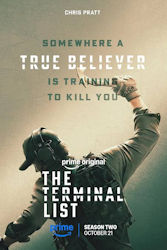
The Terminal List Season 2: Coming Soon
Season Two finds James Reece searching for a new purpose after finishing his list. But when the CIA corners him, Reece must clear his name by stopping a resurgent terrorist group that has turned an ally to their cause. In this globe-trotting espionage thriller, Reece will uncover a conspiracy that reaches from Moscow to Langley, even to his own family's history.
Watch the Trailer
Watch Reacher Season 4 on Prime Video
A chance encounter with a distraught stranger on the Philadelphia subway draws Jack Reacher into a deadly mystery.
Watch Now
Watch Lioness Season 3 on Prime Video
Inspired by a U.S. Military program, three agents embark on a dangerous undercover mission following the 9/11 terrorist attack.
Watch NowAs an Amazon Associate I earn from qualifying purchases.