Byte-Sized Overview
Some television reboots tiptoe respectfully around their predecessors. Hawaii Five-0 arrived in 2010 by jumping out of a helicopter, commandeering a sports car and informing respect that it could catch up later.
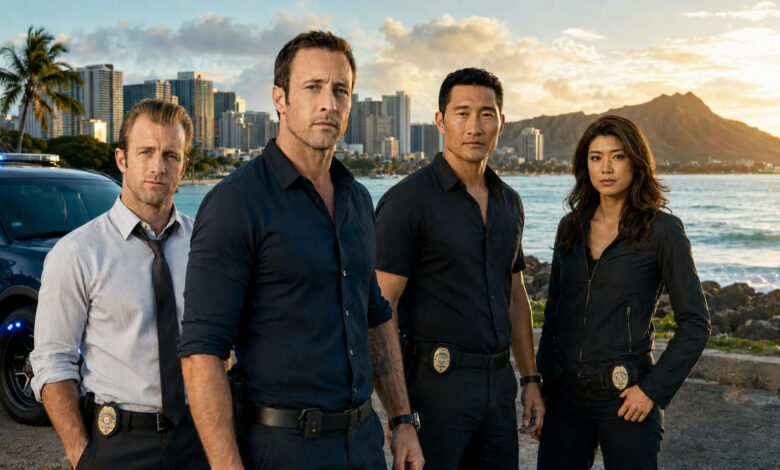
Developed by Peter M. Lenkov, Alex Kurtzman and Roberto Orci, the series updates the Jack Lord original for an age of satellite tracking, automatic weapons and detectives who process their feelings by arguing at motorway speed. Alex O’Loughlin’s decorated Navy SEAL Steve McGarrett returns to Oʻahu after his father is murdered and receives command of a special task force with unusually broad authority. He recruits New Jersey detective Danny Williams, disgraced former officer Chin Ho Kelly and newly qualified police officer Kono Kalakaua.
The result is part police procedural, part military action series and part argumentative family comedy. Cars roll, buildings explode and Five-0’s definition of “approach with caution” proves unusually flexible, but beneath the spectacle is a durable ensemble drama built around ohana: family created through loyalty, responsibility and shared experience. It ran for ten seasons and 240 episodes, which is impressive for any drama and borderline miraculous for one whose lead character treats severe physical injury as a scheduling inconvenience.
Hawaii Five-0 Transmission Details
- Show: Hawaii Five-0
- Years Active: 2010–2020
- Episodes: 240 across ten seasons
- Where to Watch:
- US: Paramount+, Netflix and digital purchase, subject to current catalogue availability
- UK: Sky Go, Paramount+, Netflix and associated channel subscriptions; all ten seasons can also be purchased digitally
- Developers: Peter M. Lenkov, Alex Kurtzman and Roberto Orci
- Based On: Characters and concepts created by Leonard Freeman for the 1968 series
- Main Cast: Alex O’Loughlin, Scott Caan, Daniel Dae Kim, Grace Park, Masi Oka, Michelle Borth, Chi McBride and Jorge Garcia
- Later Main Cast: Meaghan Rath, Beulah Koale, Ian Anthony Dale, Katrina Law, Taylor Wily, Dennis Chun and Kimee Balmilero
- Theme Music: Morton Stevens’ original composition, newly recorded under Brian Tyler’s direction
- Related Series: Hawaii Five-O, NCIS: Los Angeles, MacGyver and Magnum P.I.
- Sub-Genre Tags: Action Procedural, Police Drama, Military Thriller, Crime Drama, Conspiracy and Ensemble Drama
- Naming Note: The reboot ends with the numeral zero; the 1968 original ends with the letter O
Hawaii Five-0 Signal Strength (aka: Is It Worth Your Binge?)
If you enjoy glossy action procedurals with a strong central partnership, this is prime comfort television. The cases move quickly, the locations look magnificent and the regulars develop enough chemistry to carry episodes whose criminal schemes do not survive calm examination. You may not always believe the plot, but you will usually believe that these people would risk themselves for one another.
The first seven seasons offer the most consistent version of the show. Steve, Danny, Chin and Kono form an unusually balanced central team. O’Loughlin supplies intensity, Caan handles the comedy and friction, Kim brings thoughtful authority, and Park combines physical confidence with emotional directness. Masi Oka, Taylor Wily and a growing company of recurring players make Five-0 feel connected to a wider island community rather than permanently sealed inside a command centre.
The action is considerably more ambitious than one might expect from a weekly network procedural. There are military raids, helicopter chases, prison escapes, elaborate kidnappings and enough destroyed vehicles to make an insurance assessor quietly leave Hawaii. The production uses Oʻahu superbly, moving beyond beaches to harbours, mountain roads, suburbs, military facilities, forests and the dense streets of Honolulu.
The principal weakness is repetition. Steve’s family history contains so many secrets that John McGarrett apparently required an encrypted filing cabinet simply to remember breakfast. Danny and Steve’s “carguments” are often funny, but the same disagreement can reappear wearing a different shirt. Kidnappings become frequent enough that the team could reasonably issue loyalty cards.
The cast changes after season seven also alter the programme significantly. Meaghan Rath and Beulah Koale are likeable additions, Chi McBride had already become essential, and Ian Anthony Dale takes on greater importance. Even so, the simultaneous loss of Daniel Dae Kim and Grace Park removes two characters who helped ground the series culturally and dramatically. The real-life pay dispute surrounding their departures makes that transition harder to treat as ordinary creative renewal.
For a test run, watch the pilot, the first-season finale “Oiaʻiʻo”, “Kiʻilua”, the 2013 remake of “Hookman”, the hundredth episode “Ina Paha” and the two-hundredth episode “Pua Aʻe La Ka Uwahi O Ka Moe”. If you enjoy those, there are approximately nine years of beaches, banter and structurally questionable police powers waiting for you.
Vibe Check
- Tone: Sunshine noir with the accelerator jammed down
- Visuals: Honolulu streets, Pacific coastline, jungle, military facilities and enough aerial photography to keep the tourism board smiling
- Bingeability: Very high, particularly while the original quartet and Wo Fat arc are intact
- Action Level: Heavy, glossy and rarely discouraged by normal police jurisdiction
- Partnership Friction: Constant; Steve drives while Danny conducts a rolling inquiry into his judgement
- Conspiracy Scale: Begins with John McGarrett’s murder and expands into intelligence agencies, Yakuza families and several generations of secrets
- Humour Level: High for an action procedural, thanks to carguments, Kamekona’s businesses, Max’s eccentricities and Lou’s exasperation
- Family Work-Life Balance: Defined as bringing the entire extended ohana to the next emergency
- Operational Security: Excellent until somebody mentions Doris McGarrett, Catherine’s latest assignment or a mysterious cipher
Spoiler Mode: Plot Brief for Pub Chat
Full-series spoilers follow, including major deaths, cast departures and the ending.
Steve McGarrett begins the series escorting a prisoner, Anton Hesse, when Anton’s brother Victor takes Steve’s father hostage in Hawaii. The exchange collapses, Anton is killed and Victor murders John McGarrett. Steve returns to Oʻahu to investigate, where Governor Pat Jameson offers him command of a new task force with broad jurisdiction and direct access to her office.
Steve recruits Danny Williams, an HPD detective who moved from New Jersey to remain close to his daughter Grace; Chin Ho Kelly, a former detective driven from the police after being accused of corruption; and Chin’s cousin Kono Kalakaua, a gifted surfer completing police training. Their first case takes them after Victor Hesse and establishes the operating method: Steve makes a daring plan, Danny identifies its deficiencies, Chin quietly solves a practical problem, and Kono proves she was recruited for considerably more than family convenience.
Victor is only the first layer. Wo Fat, played by Mark Dacascos, emerges as the intelligence operative manipulating events around the McGarrett family. By the end of season one, the team discovers that Governor Jameson has concealed evidence and worked with Wo Fat. Wo Fat kills her, Steve is found at the scene and is arrested for murder, while Kono is investigated and the team is temporarily broken apart. The cliffhanger raises the possibility that Five-0’s freedom was never as secure as it looked.
Steve’s history expands through the mystery of “Shelburne”. The person behind the codename proves to be his supposedly dead mother, Doris McGarrett, a former CIA operative played by Christine Lahti. Her return explains some of John’s secrecy and almost none of Steve’s emotional stability. Doris has deep connections to Wo Fat’s past and repeatedly disappears into intelligence operations, leaving Steve caught between love, suspicion and the entirely reasonable wish that someone in his family might answer a direct question.
Wo Fat becomes Steve’s most personal adversary. He imprisons, manipulates and tortures him, and the rivalry finally reaches its climax in the hundredth episode, “Ina Paha”. Drugged by Wo Fat, Steve imagines an alternate world in which Five-0 never formed and his father survived. The fantasy shows how different each team member’s life might have been, turning a milestone episode into a statement about the family they created. Steve escapes the illusion and kills Wo Fat after a brutal fight. The victory ends the central enemy but not the damage that produced him.
Chin clears his name and gradually rises within Five-0, while his relationship with Malia Waincroft ends tragically when she is killed during an attack connected to Frank Delano. Chin later becomes guardian to his niece Sara and eventually leaves Hawaii to lead a task force in San Francisco. Kono’s story becomes increasingly entwined with Adam Noshimuri, heir to a Yakuza family. They marry, survive imprisonment, assassination attempts and Adam’s struggle to escape organised crime. At the end of season seven, Kono leaves Hawaii to pursue a sex-trafficking network on the mainland. The following season explains that Chin and Kono are continuing their respective work off screen.
Those exits reflected the departure of Daniel Dae Kim and Grace Park after contract negotiations failed amid a widely reported pay disparity. On screen, both characters receive honourable onward journeys. Off screen, their absence exposes a serious weakness in a programme set in a state with a large Asian American population.
The later team brings in Tani Rey, a talented police-academy dropout with disciplinary problems, and Junior Reigns, a former Navy SEAL who asks Steve for a job. Lou Grover, a former Chicago SWAT commander who initially clashes with Steve, has already become one of Five-0’s most dependable members. Jerry Ortega moves from conspiracy theorist and occasional consultant to badge-carrying team member, although he leaves after being shot and deciding to pursue a different life. Adam returns, leads an organised-crime division and struggles with the continuing consequences of his family background. Quinn Liu joins in the final season after Army CID trouble of her own.
Steve’s romantic relationship with Catherine Rollins runs through much of the series. Catherine is capable, loyal and sufficiently involved in intelligence work to ensure that arranging dinner can become a matter of national security. She leaves to continue humanitarian and covert work, returns intermittently, and remains the person most able to understand both Steve’s sense of duty and his inability to put it down.
Danny’s life remains rooted in Grace, his son Charlie and his extended family. His fierce devotion as a father provides a counterweight to the action, although the series subjects him to shootings, custody disputes, romantic disasters and the murder of his brother Matt. Steve and Danny repeatedly save one another, transforming their comic hostility into the show’s most dependable emotional relationship.
The final season kills Doris during a dangerous operation in Colombia, leaving Steve exhausted by years of loss. In “Aloha”, Wo Fat’s widow Daiyu Mei kidnaps Danny and demands a cipher Doris left behind. Danny is badly wounded while escaping, but Steve and the team rescue him and stop Daiyu Mei. With Danny recovering, Steve admits that he needs to leave Hawaii and find peace.
The team gathers to say goodbye. Steve entrusts Five-0 to newcomer Lincoln Cole, says farewell to Danny and boards a plane. Catherine takes the seat beside him, suggesting that whatever comes next will not be faced alone. The series does not end with Steve defeating one more criminal. It ends with him finally permitting himself to stop.
Hawaii Five-0 Character Shout-Outs
- Steve McGarrett: Navy SEAL, tactical commander and devoted enemy of ordinary entrances; brave to the point of self-destruction and most comfortable when somebody else needs saving
- Danny “Danno” Williams: Detective, father and one-man regulatory body for Steve McGarrett, whose complaints are usually correct even when nobody intends to act on them
- Chin Ho Kelly: Intelligent, dignified and likely to solve the practical problem before everyone else finishes discussing its dramatic implications
- Kono Kalakaua: Fearless rookie turned elite operative, with the confidence required to enter any criminal organisation as though she already knows the Wi-Fi password
- Lou Grover: Former rival commander, eventual family member and experienced adult continually discovering that nobody arranged supervision
- Catherine Rollins: Naval intelligence officer, operational equal to Steve and unfortunately blessed with the same talent for withholding life-changing information
- Max Bergman: Clever, kind and pleasingly peculiar medical examiner with precise speech and an annual commitment to Keanu Reeves costumes
- Tani Rey and Junior Reigns: Rebellious instinct and military discipline combined into the later seasons’ most appealing new partnership
- Adam Noshimuri: Yakuza heir attempting to leave a family empire that regards escape as a personal insult
- Jerry Ortega: Conspiracy enthusiast who moves from tolerated consultant to trusted, badge-carrying member of the team
- Kamekona Tupuola: Informant, entrepreneur, provider of shrimp and owner of a new business idea approximately every eleven minutes
- Wo Fat: Physically dangerous, strategically patient and tied directly to the secrets that shaped Steve’s life
Hawaii Five-0 Memorable Moments
- The pilot, where John McGarrett’s murder, Steve and Danny’s armed first meeting and a container-port showdown detonate the complete formula
- Governor Jameson’s murder and Steve’s arrest at the end of season one
- “Kiʻilua”, which sends the team into North Korea on a rescue operation located several thousand miles beyond normal police jurisdiction
- The third-season remake of “Hookman”, reconstructed with original locations, compositions and modern action
- “Ho‘onani Makuakane”, where a present-day investigation confronts wartime internment and historical memory in Hawaii
- “Ina Paha”, the hundredth episode, as Wo Fat forces Steve into an alternate life where Five-0 never formed
- Steve and Wo Fat’s final, brutal fight at the end of “Ina Paha”
- “Pua Aʻe La Ka Uwahi O Ka Moe”, the two-hundredth episode and its stylised journey into a 1940s cold case
- The carguments, during which Steve drives and Danny audits his speed, judgement, emotional availability and effect on nearby property
- The final ohana gathering before Steve leaves Hawaii in “Aloha”
- Catherine taking the seat beside Steve on the plane, suggesting his search for peace will not be solitary
Performance Highlights
- Alex O’Loughlin: Carries an exceptionally physical role while revealing the damaged operator beneath Steve’s control and tactical confidence
- Scott Caan: Turns exposition into comedy, comedy into tenderness and Danny’s relentless complaints into the programme’s tonal safeguard
- Daniel Dae Kim: Gives Chin measured strength, dignity and authority without overplaying the character’s pain
- Grace Park: Makes Kono’s progression from rookie to veteran convincing through physical assurance and moral clarity
- Chi McBride: Brings enough presence to challenge the established partnership and enough warmth to become essential to it
- Masi Oka: Ensures Max’s eccentricity never overwhelms his intelligence, kindness or emotional truth
- Jorge Garcia: Develops Jerry from a collection of conspiracy theories into a genuinely valued member of Five-0
- Taylor Wily: Turns Kamekona from colourful informant into one of the show’s warmest recurring presences
- Mark Dacascos: Gives Wo Fat controlled intensity, physical danger and personal menace across a deliberately tangled mythology
- James Marsters: Makes Victor Hesse an immediate and memorable catalyst for the entire series
- Will Yun Lee: Steals scenes as Sang Min, shifting confidently between criminal, informant and reluctant ally
- Meaghan Rath, Beulah Koale, Ian Anthony Dale and Katrina Law: Build a credible later ensemble without attempting to imitate the original quartet
Skull Face’s Take
The 2010 Hawaii Five-0 is nonsense constructed with tremendous professional skill.
That is not an insult. Television would be a bleak landscape if every police drama concerned itself exclusively with realistic paperwork and accurately modelled jurisdiction. Five-0 operates in a brighter universe where an elite task force can investigate a murder, expose an international conspiracy, exchange fire on a container ship and still reach Kamekona’s shrimp truck before the food gets cold.
Its secret is not the action, attractive though the action often is. The secret is the cast. Steve and Danny provide the entry point, but the programme keeps expanding the definition of family until medical examiners, informants, conspiracy theorists, Yakuza heirs and grumpy SWAT captains are all included. The word ohana is used frequently enough to qualify for its own credit, yet the show usually earns the sentiment through accumulated behaviour.
I particularly like that the reboot respects the original without allowing reverence to paralyse it. It preserves Morton Stevens’ theme, the character names, the title sequence and the essential Hawaiian setting. It restores old plots and invites performers connected to the 1968 series. Then it builds a different rhythm around military action, serialised family mysteries and comic partnership. The original McGarrett would probably regard the new team’s workplace conversation as a collapse in discipline, but he would recognise the commitment.
There are frustrations. Steve’s family mythology becomes needlessly tangled. Catherine’s repeated arrivals and departures sometimes feel controlled by airport departure boards rather than character logic. The series can use Hawaiian culture as atmosphere while centring mainland institutions and perspectives. The departures of Kim and Park, and the circumstances surrounding them, expose how incomplete its commitment to representation could be behind the camera.
There are also episodes in which Five-0’s immunity appears to cover the laws of physics. After the third major explosion of the hour, one begins to wonder whether Honolulu’s municipal budget contains a specific McGarrett contingency fund.
Nevertheless, the show delivers exactly what its opening promises. The music surges, the wave curls and a team of absurdly capable people races across a beautiful island to stop something dreadful. It is glossy network television with a good heart, a powerful engine and no meaningful interest in the speed limit.
Why Hawaii Five-0 Has Drama/Action Icon Potential
The programme begins with an advantage most reboots can only dream about: an indestructible title sequence and theme. By retaining Morton Stevens’ music and reconstructing the famous imagery in modern form, the 2010 series connects immediately with decades of cultural memory. It sounds like Hawaii Five-O before anyone speaks.
The new version then creates an identity of its own through Steve and Danny. Their partnership is not simply hero and sidekick. It is a sustained clash of temperament that becomes a language of affection. “Carguments” turn travelling between plot points into one of the show’s signature pleasures. Countless procedurals have partners who exchange dry remarks. Few build a ten-year relationship from one man driving too fast while the other conducts a rolling inquiry into his judgement.
Its action also has scale. Filming in Hawaii gives pursuits and tactical sequences geographical weight that studio streets cannot imitate. The camera can move from dense Honolulu blocks to jungle, coast, mountain and military terrain within a single episode. The islands provide beauty, but they also provide an unusually varied action canvas.
The ensemble is broad enough to support different forms of drama. Chin and Kono ground the early seasons in family and community. Lou adds mature authority and comedy. Catherine links Steve to the military and intelligence world. Adam brings organised crime into the family. Kamekona and Jerry connect investigations to a less official network. The series can therefore change tone without appearing to change programmes completely.
Finally, ten seasons create cultural permanence. The reboot lasted long enough for children who discovered it in 2010 to become adults before Steve boarded that final plane. It produced 240 episodes, crossed over with other programmes and helped sustain a modern CBS universe in Hawaii. It did not replace the Jack Lord series. It proved the format could support a distinct second life.
Deep Dive Highlights
- An early pilot used a heavily altered synthesiser-and-guitar theme before the producers returned to Morton Stevens’ recognisable arrangement
- Brian Tyler conducted a new recording with 35 musicians, including three players who had worked on the original series
- Jack Lord’s 1974 Mercury Marquis appears in the pilot
- Ed Asner reprises original-series criminal August March rather than playing a newly invented character
- Al Harrington, the original Ben Kokua, appears as Mamo Kahike
- Dennis Chun, who plays Duke Lukela, is the son of Kam Fong, the original Chin Ho Kelly
- “Hookman” recreates locations and compositions from the 1973 original episode
- A digital recreation of Jack Lord appears during the 150th episode
- Most episodes use Hawaiian titles followed by English translations in programme listings
- Five-0 crosses over with NCIS: Los Angeles, MacGyver and the 2018 Magnum P.I.
- “Ina Paha” imagines alternate present-day lives, while the two-hundredth episode looks back towards Steve’s grandfather and 1940s Honolulu
- Daniel Dae Kim and Grace Park left after seven seasons when contract negotiations failed amid a reported pay disparity
- Ten years of Hawaii production provided sustained work for local crews, performers, suppliers and locations
- The series helped maintain production infrastructure later used by Magnum P.I. and NCIS: Hawaiʻi
- CBS announced in February 2020 that the tenth season would be the last
- The final team farewell was filmed shortly after the cast and crew learned that the programme was ending
Legacy & Impact
The reboot succeeded at the most basic and most difficult task facing any revival: it justified returning. It retained the title, music, characters and location, but changed the dramatic engine enough to attract viewers who had never seen Jack Lord on the Ilikai balcony. Ten seasons later, it had become a classic network procedural in its own right.
Its version of Steve and Danny influenced the tone of the entire series. The combination of action and affectionate conflict offered a template for procedurals that wanted both spectacle and a relaxed ensemble. Crimes supplied the weekly structure, but friendship created continuity. Viewers returned less to discover which smuggler had used which container and more to spend another hour with the family surrounding Five-0 headquarters.
The programme also reinforced Hawaii’s place in American television production. Unlike dramas that borrow a few establishing shots and retreat to California, Hawaii Five-0 used Oʻahu extensively and visibly. Its long run supported local crews and normalised the idea of a continuing network franchise produced in the islands. The later Magnum P.I. revival shared its world, and several Five-0 characters continued appearing after the parent show ended.
Culturally, the legacy is more complicated. The series gave substantial visibility to performers including Daniel Dae Kim, Grace Park, Ian Anthony Dale, Beulah Koale, Taylor Wily, Dennis Chun and many Hawaii-based guests. It incorporated Hawaiian language and ideas of family into mainstream primetime television. Yet its perspective frequently remained that of a mainland action drama using Hawaii, and the pay-equity controversy revealed a gap between representation on screen and power behind it.
Its respect for the original has aged well. The producers understood that legacy is not maintained by repeating “Book ’em, Danno” until the words lose meaning. It is maintained through craft: recording the theme properly, preserving visual motifs, inviting earlier performers into substantial roles and occasionally rebuilding an old episode to see how television storytelling has changed.
Most importantly, the reboot created its own emotional ending. Steve begins the series returning to Hawaii because his father has been murdered. He remains because the task force becomes his family. He leaves only after that family is strong enough to continue without him. For a programme fond of explosions, the final victory is remarkably quiet: Steve McGarrett gets on a plane and allows himself to imagine peace.
Want to Go Deeper?
- Watch Hawaii Five-0 on Sky (Ten seasons, one task force and a local vehicle-repair industry operating at full capacity)
- Watch Hawaii Five-0 on Paramount+ UK (Check the included seasons before allowing Steve to plan the weekend)
- Check current UK availability on JustWatch (Useful because streaming catalogues change safe houses more often than Wo Fat)
- Explore Hawaii Five-0 on IMDb (Cast, crew and 240 episodes for anyone maintaining a list without terminal consequences)
- Read CBS’s guide to the original-series references (A full archaeological survey of cars, characters, dialogue and one extremely resilient theme tune)
Recommended TV Products

Watch Law & Order: Special Victims Unit on Prime Video
From the creator of "Law & Order", comes a powerful series chronicling the life and crimes of the Special Victims Unit of the NYPD.
Watch Now
Watch Lioness Season 3 on Prime Video
Inspired by a U.S. Military program, three agents embark on a dangerous undercover mission following the 9/11 terrorist attack.
Watch Now
The Terminal List Season 2: Coming Soon
Season Two finds James Reece searching for a new purpose after finishing his list. But when the CIA corners him, Reece must clear his name by stopping a resurgent terrorist group that has turned an ally to their cause. In this globe-trotting espionage thriller, Reece will uncover a conspiracy that reaches from Moscow to Langley, even to his own family's history.
Watch the TrailerAs an Amazon Associate I earn from qualifying purchases.