🎬 Byte-Sized Overview
New York’s darkest cases meet television’s most dependable detective. The crimes are brutal, the paperwork is eternal, and Olivia Benson is still standing.
📺 Law & Order: Special Victims Unit Transmission Details
- Show: Law & Order: Special Victims Unit
- Years Active: 1999–present
- Episodes: 27 completed seasons, 594 episodes, with season 28 beginning in October 2026
- Where to Watch:
- US: NBC and Peacock
- UK: Selected seasons are available through Netflix, Disney+, Sky Go, NOW and Channel 5. Individual seasons can also be purchased through Amazon Video and Apple TV. Availability varies considerably by season.
- Creator: Dick Wolf
- Main Cast: Mariska Hargitay, Christopher Meloni, Ice-T, Richard Belzer, Dann Florek, Kelli Giddish, Peter Scanavino and Raúl Esparza
- Sub-Genre Tags: Police Procedural, Crime Drama, Legal Drama, New York Television and Ripped from the Headlines
📊 SVU Signal Strength (aka: Is It Worth Your Binge?)
Absolutely, although “binge” may be an ambitious word when there are nearly 600 episodes waiting for you.
SVU takes the familiar machinery of Law & Order and points it towards crimes that television once tended to avoid or discuss only in whispers. The result can be upsetting, occasionally sensational and sometimes exhausting, but at its best it is powerful television built around empathy, investigation and the complicated pursuit of justice.
The cases provide the weekly engine, but Olivia Benson provides the soul. Mariska Hargitay has carried the series from its original late-1990s procedural format into something far more character-driven. Detectives, prosecutors and commanding officers have come and gone, while Benson has somehow survived psychopaths, kidnappings, departmental politics and approximately twelve million conversations in dimly lit hospital corridors.
🧭 Vibe Check
- Tone: Serious, compassionate and frequently harrowing
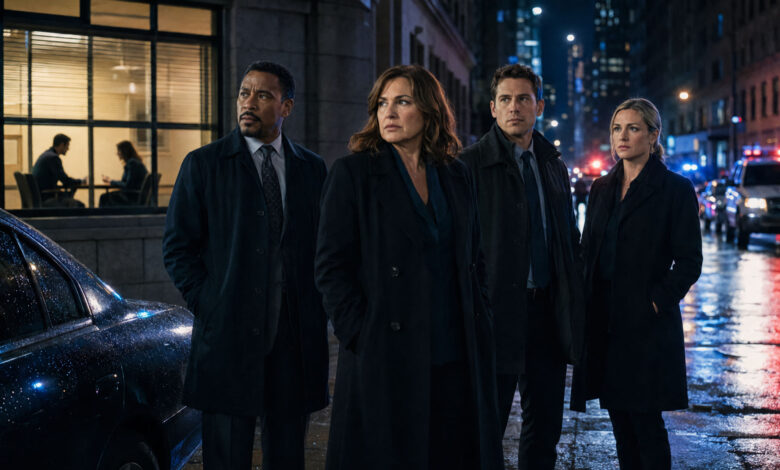
- Visuals: New York streets, interview rooms, courtrooms and squad offices where nobody appears to have enjoyed a full night’s sleep
- Bingeability: Extremely high, provided you occasionally emerge for daylight and something cheerful
- Cheese Factor: Usually low, although some later episodes squeeze every available drop from the emotional soundtrack
- Emotional Wear and Tear: Considerable. This is not background television for a children’s birthday party
🕵️ Spoiler Mode: Plot Brief for Pub Chat
The series follows the detectives of Manhattan’s Special Victims Unit as they investigate sexual offences, domestic abuse, crimes against children and cases involving particularly vulnerable victims.
When the show begins, Detectives Olivia Benson and Elliot Stabler form its central partnership. Benson is instinctively empathetic, patient with survivors and driven by her own complicated family history. Stabler is more volatile, carrying the anger and distress of the job home to his wife and children. Together they make an effective but increasingly damaged team.
They are supported by Captain Donald Cragen, the wonderfully suspicious John Munch and Odafin “Fin” Tutuola, a detective whose calm delivery can reduce an elaborate criminal excuse to rubble in half a sentence. Medical examiner Melinda Warner and psychiatrist George Huang add expertise without turning every case into a lecture accompanied by dramatic diagrams.
After Stabler’s departure, Benson gradually becomes the undisputed centre of the series. She rises through the ranks, adopts her son Noah and continues leading the squad while her personal life repeatedly collides with the work. Her ordeal at the hands of serial offender William Lewis pushes the show into unusually dark territory and leaves consequences that cannot be neatly packed away before the closing credits.
Newer detectives arrive, most notably Amanda Rollins, whose instincts are often excellent even when her personal decisions are sponsored by chaos. Sonny Carisi begins as an enthusiastic detective with questionable tailoring, studies law and eventually moves into the District Attorney’s office. Their relationship gives the later seasons one of the show’s warmer continuing threads.
Stabler eventually returns to New York, bringing years of unresolved history with him. His reunion with Benson is emotional, awkward and packed with enough suppressed feeling to power several police stations. Naturally, the show continues to make viewers wait for a straightforward conversation. After more than two decades, patience has become part of the franchise.
🧢 SVU Character Shout-Outs
- Olivia Benson: Compassionate, stubborn and apparently indestructible. The person you would want beside you on the worst day of your life
- Elliot Stabler: An excellent detective whose anger management strategy traditionally involved becoming even angrier
- Fin Tutuola: Dry, observant and gloriously unimpressed by nonsense
- John Munch: Conspiracy theorist, philosophical detective and the only man capable of connecting a routine arrest to three government agencies and a disputed moon landing
- Amanda Rollins: A sharp investigator whose greatest recurring suspect is her own judgement
- Sonny Carisi: Detective turned prosecutor, powered by persistence, decency and enough family stories to fill another spin-off
- Rafael Barba: Brilliant, theatrical and able to turn a courtroom objection into a personal threat
- Donald Cragen: The weary captain permanently one phone call away from being shouted at by somebody higher up
📼 Memorable SVU Moments
- Benson trying to locate a frightened child using only a telephone call in “911”
- The William Lewis storyline, which permanently changes Benson and tests how far the series is prepared to push its central character
- Stabler’s abrupt departure and the emotional vacuum it leaves behind
- Robin Williams playing a dangerously persuasive campaigner in “Authority”
- The disturbing Henry Mesner stories, beginning with “Born Psychopath”
- Barba making an agonising decision that ends his time as a prosecutor
- Rollins and Carisi finally turning years of trust and chemistry into something more
- Benson and Stabler meeting again after a decade apart
- Any scene in which Fin listens silently while a suspect talks themselves directly into an arrest
🎭 Performance Highlights
- Mariska Hargitay: The reason the show has lasted. She gives Benson authority without losing vulnerability and compassion without turning her into a saint
- Christopher Meloni: Brings physical intensity, anger and genuine emotional conflict to Stabler
- Ice-T: Delivers some of television’s driest dialogue while keeping Fin grounded and believable
- Richard Belzer: Makes Munch funny, cynical and unexpectedly tender without ever losing the character’s peculiar edge
- Kelli Giddish: Gives Rollins enough flaws to make her frustrating, sympathetic and completely human
- Raúl Esparza: Turns Barba’s courtroom arguments into verbal knife fights
- Peter Scanavino: Guides Carisi from overeager outsider to one of the programme’s most dependable moral centres
🎯 Skull Face’s Take
SVU should not still work. A police procedural launched in 1999 ought to feel like a cultural fossil by now, sitting beside dial-up internet and trousers with an unreasonable number of pockets.
Instead, it has repeatedly adapted around one extraordinary central performance. Not every storyline lands. Some episodes are subtle; others arrive carrying a megaphone, flashing lights and a headline borrowed from last Tuesday. Its enormous run includes uneven seasons, repeated ideas and moments when Benson appears to be personally responsible for every investigation in New York.
But when SVU is good, it is very good. It understands that solving a crime and repairing the damage are not the same thing. Its finest episodes give survivors a voice, allow difficult questions to remain difficult and recognise that justice can be imperfect even when everyone involved is trying to do the right thing.
Come for the familiar “DUN DUN”. Stay because Olivia Benson has made leaving the squad emotionally impossible.
🧨 Why SVU Is a Drama/Action Icon
SVU transformed a successful spin-off into a television institution. It became the longest-running primetime live-action series in American television history and made Olivia Benson one of the medium’s most enduring dramatic characters.
More importantly, the series helped bring subjects such as sexual assault, coercive control, domestic abuse and the treatment of survivors into mainstream television. It has not always handled every issue perfectly, but it has consistently attempted to treat victims as people rather than evidence required to move a plot forward.
Its influence also extends beyond television. After receiving thousands of messages from survivors, Mariska Hargitay trained as a crisis counsellor and founded the Joyful Heart Foundation in 2004. That connection between the programme, its audience and real-world advocacy gives SVU a significance few procedurals can match.
🔍 Deep Dive Highlights
- Mariska Hargitay won the 2006 Emmy for Outstanding Lead Actress in a Drama Series, becoming the first regular performer from the Law & Order franchise to win an acting Emmy
- Hargitay has played Olivia Benson continuously since the first episode in 1999
- Ice-T joined during season two and turned what was intended as a short appearance into one of television’s longest-running roles
- John Munch originated on Homicide: Life on the Street and appeared across numerous television series, making him the undisputed king of the crossover
- The show passed its 500th episode in 2021 and is due to reach episode 600 during season 28
- Numerous episodes draw inspiration from real cases and contemporary controversies, although names, circumstances and outcomes are usually changed
- Benson and Stabler’s relationship has survived partnership, separation, bereavement, spin-offs and more unresolved tension than most prestige romances manage in a lifetime
📢 Legacy & Impact
After more than a quarter of a century, SVU is no longer simply another crime drama. It is part of television’s furniture, although considerably less comfortable and more likely to ask where you were on the night in question.
Cast members have changed, the storytelling has evolved and the balance between procedural cases and personal drama has shifted repeatedly. Through it all, the programme has maintained a recognisable purpose: listen to survivors, pursue the truth and keep working when the legal system fails to provide a satisfying ending.
Its greatest legacy is Olivia Benson. Characters are not supposed to remain interesting for nearly 600 episodes, yet Hargitay has allowed Benson to age, lead, struggle and change. She has become more than the face of a franchise. For many viewers, she represents the person they wish would answer when somebody finally asks for help.
🔗 Want to Go Deeper?
- Watch Law & Order: Special Victims Unit on NBC (Clear the evening. And possibly the next several years.)
- Stream Law & Order: SVU on Peacock (Season availability may vary)
- Read about the Joyful Heart Foundation (The programme’s most important real-world legacy)
- Law & Order: Special Victims Unit on IMDb (For when “just one more episode” becomes an archaeological expedition)
Recommended TV Products
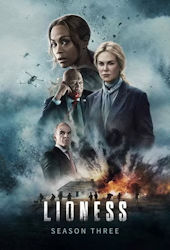
Watch Lioness Season 3 on Prime Video
Inspired by a U.S. Military program, three agents embark on a dangerous undercover mission following the 9/11 terrorist attack.
Watch Now
The Terminal List Season 2: Coming Soon
Season Two finds James Reece searching for a new purpose after finishing his list. But when the CIA corners him, Reece must clear his name by stopping a resurgent terrorist group that has turned an ally to their cause. In this globe-trotting espionage thriller, Reece will uncover a conspiracy that reaches from Moscow to Langley, even to his own family's history.
Watch the Trailer
Watch Law & Order: Special Victims Unit on Prime Video
From the creator of "Law & Order", comes a powerful series chronicling the life and crimes of the Special Victims Unit of the NYPD.
Watch NowAs an Amazon Associate I earn from qualifying purchases.