Byte-Sized Overview
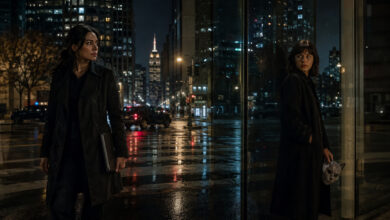
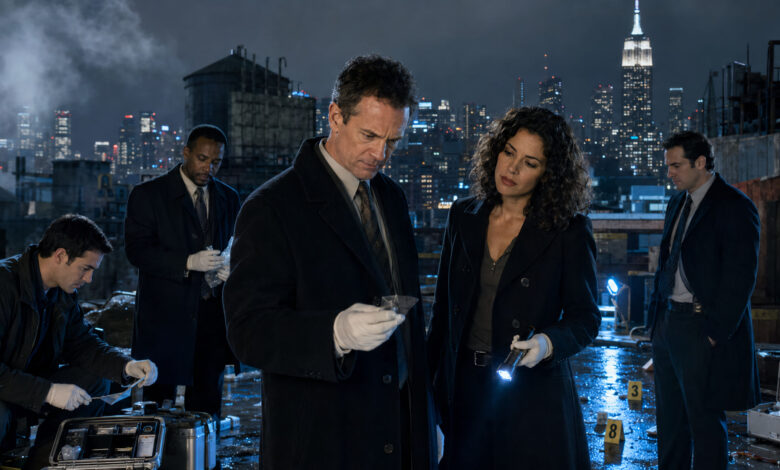
If Las Vegas gave the CSI franchise neon, insects and crimes committed by people who had badly misunderstood the privacy offered by a casino hotel, CSI: NY brought steel, snow and the permanent suspicion that whatever evidence you need is currently beneath twelve million commuters. The second spin-off from CSI: Crime Scene Investigation follows an NYPD forensic team led by Detective Mac Taylor, a former Marine whose controlled exterior conceals grief, loyalty and a formidable intolerance for anyone treating physical evidence as a creative writing exercise. Launched in 2004, the series exchanges Miami’s blazing colours for cold blues, grey streets and a city that seems capable of producing a murder scene in every loft, subway tunnel, skyscraper and suspiciously spacious Manhattan flat.
Gary Sinise anchors the show as Mac, working alongside Melina Kanakaredes’ tough and intuitive Stella Bonasera, volatile Brooklyn investigator Danny Messer, former medical examiner Sheldon Hawkes, homicide detective Don Flack and, initially, native New Yorker Aiden Burn. Lindsay Monroe arrives from Montana in season two, eccentric medical examiner Sid Hammerback and nervous technical wizard Adam Ross become increasingly important, and Sela Ward’s Jo Danville brings warmth and profiling experience to the final three seasons. The group has plenty of forensic machinery, but its strongest tool is the sense that these people genuinely know one another. They argue, protect, tease, marry, grieve and occasionally survive armed assaults on their own laboratory, which is an unnecessarily emphatic way for management to discourage working from the office.
Of the three original CSI programmes, CSI: NY is often the most emotionally grounded. Its first season is sombre and heavily shaped by the aftermath of 9/11, particularly through Mac’s loss of his wife Claire. Later years introduce more colour, humour and action without entirely abandoning that weight. The science remains television science, where trace evidence is cooperative and laboratory queues have apparently been defeated, but the show’s best stories connect each clue to a recognisable human cost. It is less flamboyant than CSI: Miami and less revolutionary than the Las Vegas original, yet its dependable cast, urban atmosphere and willingness to let characters change make it an immensely satisfying procedural. Also, Gary Sinise can stare at a fibre until it confesses. Some skills cannot be taught.
CSI: New York Transmission Details
- Show: CSI: NY, formally expanded as CSI: Crime Scene Investigation New York and commonly called CSI: New York.
- Years Active: 2004–2013.
- Seasons: 9.
- Episodes: 197.
- Original US Network: CBS, premiering on 22 September 2004 and ending on 22 February 2013.
- Original UK Broadcaster: Channel 5, where the first season began in February 2005. The channel later aired the final season in 2013 and closed its farewell night by repeating the pilot, Blink.
- Where to Watch: Streaming rights have wandered off with the determination of a suspect who has spotted Flack approaching.
- US: Availability varies. Paramount+ carries the programme in some territories, while digital purchase options may be available through Apple TV and other major shops.
- UK: At the time of writing, there is no subscription streaming service carrying the complete series. Seasons can be purchased through the Apple TV Store, although individual-season availability should be checked before committing to a nine-season investigation.
- Creators: Anthony E. Zuiker, Ann Donahue and Carol Mendelsohn.
- Key Executive Producers: Jerry Bruckheimer, Jonathan Littman, Pam Veasey, Peter M. Lenk, Anthony E. Zuiker, Ann Donahue and Carol Mendelsohn were among the major producing figures across the series.
- Original Main Cast: Gary Sinise, Melina Kanakaredes, Carmine Giovinazzo, Vanessa Ferlito, Hill Harper and Eddie Cahill.
- Later Main Cast: Anna Belknap, Sela Ward, A.J. Buckley and Robert Joy.
- Theme Music: “Baba O’Riley” by The Who. The arrangement became more instrumental from season four, but the opening remains capable of making microscope calibration feel heroic.
- Related Series: CSI: Crime Scene Investigation, CSI: Miami, CSI: Cyber and CSI: Vegas, with crossover stories involving both Miami and Las Vegas personnel.
- Sub-Genre Tags: Forensic procedural, police drama, New York noir, workplace ensemble, urban crime, serial killers, action thriller.
CSI: New York Signal Strength (aka: Is It Worth Your Binge?)
Yes. CSI: NY takes a little time to locate its ideal temperature, but once it does, it becomes one of the franchise’s most consistently watchable entries. Season one is colder, darker and more restrained than what follows. That approach suits Mac’s grief and gives the city a severe post-9/11 atmosphere, although early episodes can feel as if somebody turned down both the saturation and the office heating. From season two onwards the programme loosens up, expands the laboratory, strengthens the ensemble and allows humour into the building without leaving the door open for silliness.
The middle run is particularly strong. Danny and Lindsay develop from competitive colleagues into a couple and eventually a family. Stella’s history creates several excellent personal cases. Flack’s laconic humour prevents the police work becoming oppressively solemn, while Hawkes, Sid and Adam give the laboratory a lived-in rhythm. Large-scale episodes such as Snow Day prove that the show can deliver action without forgetting forensic problem-solving, and quieter hours including Yahrzeit and Indelible demonstrate that it can address history and grief without reducing them to decorative seriousness.
Nine seasons and 197 episodes make this a substantial binge, but not an archaeological commitment on the scale of the original CSI. The procedural cases allow casual viewing, while the longer character stories reward keeping the episodes in order. There are improbable gadgets, killers with extraordinary presentation skills and enough attacks upon team members to justify moving the crime lab to an undisclosed bunker. Even so, the emotional continuity is unusually solid. If you like forensic mysteries but want a warmer ensemble and more character development than the franchise stereotype suggests, CSI: NY deserves considerably more than its frequent status as “the other spin-off”.
Vibe Check
- Tone: Initially cold and mournful, gradually becoming warmer, faster and more openly character-driven.
- Visuals: Steel blue streets, glass laboratories, winter light, rooftop skylines and the occasional splash of nightclub colour attempting to survive New York rent.
- Bingeability: High, especially once the team chemistry settles and Danny and Lindsay begin generating more tension than the mass spectrometer.
- Forensic Detail: Glossy, inventive and dramatically compressed, with machinery that regards a backlog as a personal insult.
- Action Level: Higher than the series’ sombre reputation suggests. Hostage situations, explosions, shootings and laboratory invasions arrive with alarming workplace regularity.
- Emotional Weight: Considerable. Grief, family, survivor’s guilt and loyalty are built into the characters rather than added only when sweeps week approaches.
- Humour Level: Dry and increasingly warm, led by Flack’s expression, Sid’s oversharing and Adam’s lifelong struggle to appear calm near authority figures.
- New York Authenticity: A persuasive mixture of genuine location work, Los Angeles production and apartments no public employee could obtain without inheriting a minor railway.
- Workplace Safety: Deeply theoretical. The lab is raided, bombed and invaded often enough that visitors should sign both an evidence form and a will.
Spoiler Mode: Plot Brief for Pub Chat
Major spoilers begin here. Seal the page in an evidence bag if you are still working through the box set.
The team first appears in the CSI: Miami crossover episode MIA/NYC NonStop, when Horatio Caine follows a murder investigation to New York and meets Mac Taylor and Stella Bonasera. The proper series begins with Blink, a bleak case involving women imprisoned inside their own bodies by a killer using paralysing drugs. Mac reaches one surviving victim and finds a way to communicate through blinking. The case reflects his own emotional condition. His wife Claire died in the World Trade Center attacks on 11 September 2001, and although Mac remains functional, disciplined and absolutely committed to the job, part of him is still trapped in the moment she disappeared.
Mac is a former United States Marine and an investigator who believes evidence provides certainty in a city built from noise. He is principled, conservative in temperament and sometimes dangerously convinced that his own moral judgement is the stable object in the room. His friendship with Stella allows her to challenge him when others cannot. His employees regard him with loyalty bordering on family devotion, partly because he protects them fiercely and partly because disappointing Gary Sinise’s expression of quiet concern looks emotionally expensive.
Claire’s absence shapes Mac’s story for years. He keeps reminders of her, struggles to permit new relationships and later learns that Claire had a son, Reed Garrett, whom she placed for adoption before meeting Mac. Reed, now a journalist, gradually becomes part of Mac’s life and is endangered while investigating the Cabbie Killer. Mac also forms a relationship with medical examiner Peyton Driscoll, but distance and his unresolved grief prevent it from lasting. Christine Whitney, the sister of an old friend, finally offers him the possibility of a future not defined solely by loss. When Mac is shot during a pharmacy robbery in the season-eight finale Near Death, he experiences visions of Claire. Her apparent blessing allows him to release some of his guilt about loving Christine and choose life again.
Stella Bonasera is Mac’s original second-in-command, an orphan raised in foster care who has built herself into a formidable investigator. She is compassionate with victims, impatient with evasion and more comfortable displaying emotion than Mac, although this is an extremely low bar involving a man who could make a birthday party look like a military briefing. Stella’s personal life repeatedly collides with her work. Her boyfriend Frankie becomes controlling and violent, attacks her in her flat and is killed when she shoots him in self-defence. The forensic investigation forces her colleagues to process the most traumatic moments of her life as evidence, and Kanakaredes plays Stella’s shock without weakening the character.
Stella later fears she may have contracted HIV after being cut by contaminated glass, pursues the truth about her Greek heritage and becomes involved in a case concerning stolen antiquities. Her determination sometimes pushes beyond Mac’s rules, creating one of their sharpest conflicts, but their friendship survives. After season six, Stella leaves New York to lead a crime laboratory in New Orleans. The departure occurs off screen and feels abrupt because Melina Kanakaredes chose not to return. In story terms, however, it is a deserved promotion for someone who spent six years doing the work of three investigators and an emergency support service.
Aiden Burn begins as a confident Brooklyn CSI with quick instincts and easy chemistry with Danny. Her downfall comes through a rape case involving D.J. Pratt. Furious that Pratt has escaped conviction and may attack again, Aiden considers planting evidence. She does not go through with it, but Mac discovers what she contemplated and dismisses her because the integrity of the laboratory cannot survive even the possibility. Aiden continues investigating Pratt privately. He eventually realises she is following him, murders her and burns her body inside a stolen car. In Heroes, the team identifies Aiden through forensic details and discovers that she deliberately left evidence behind during the attack. Even in death she conducts her own crime scene, allowing her friends to convict Pratt. It is one of the show’s cruellest and most fitting exits.
Lindsay Monroe arrives from Montana as Aiden’s replacement. Her rural background becomes a source of gentle teasing, but she quickly establishes that “Montana” is not a synonym for inexperienced. Lindsay’s enthusiasm hides severe trauma. As a teenager she was the only survivor when a gunman killed three friends and a waitress in a diner. The trial forces her to return home and finally testify, with Danny travelling to support her. The storyline explains her difficulty with certain cases and deepens the attraction already developing between them.
Danny Messer has grown up close enough to organised crime and street loyalties to understand both sides of the police line. Mac once took a professional risk by recruiting him, and Danny’s impulsiveness repeatedly tests that faith. His older brother Louie becomes involved with the Tanglewood Boys and is savagely beaten after helping Danny expose them, leaving his ultimate condition unresolved. Danny’s defensiveness, anger and habit of carrying every failure personally make him an excellent investigator and a difficult colleague. Carmine Giovinazzo gives the character the energy of a man whose mouth frequently enters the room several seconds before his judgement.
Danny and Lindsay’s relationship develops through teasing, avoidance and emotional support rather than a tidy office romance. They sleep together after the laboratory siege in Snow Day, but Danny later withdraws after the death of a young neighbour, Ruben Sandoval, for whom he feels responsible. His grief draws him towards Ruben’s mother Rikki, damaging his relationship with Lindsay. They eventually reconcile. Lindsay becomes pregnant, Danny proposes and they marry in a small civil ceremony before the birth of their daughter Lucy. Their family becomes one of the series’ emotional anchors, particularly because the writers regard domestic happiness as something that should immediately be tested with gunfire.
At the end of season five, Detective Jessica Angell is killed during an ambush while transporting prisoner Connor Dunbrook. Flack, who has been developing a relationship with Angell, is devastated. After the funeral, the team gathers in a bar and gunmen attack. Danny is struck in the back, leaving him temporarily unable to walk. Season six follows his painful rehabilitation and fear that he may not recover, while Lindsay refuses to let him turn despair into a permanent residence. He eventually returns to field work. Later, serial killer Shane Casey escapes custody, targets Danny and Lindsay, and appears in their home holding baby Lucy. Lindsay shoots him, saving her family and receiving the Police Combat Cross. This is less a quiet parental milestone than most childcare books recommend.
Sheldon Hawkes begins as the medical examiner before moving into field investigation in season two. A former surgeon, he left the operating theatre after losing patients and carries a complicated relationship with responsibility. Hawkes is usually calm, brilliant and empathetic, but cases touching his past can penetrate that discipline. He is framed for murder by escaped killer Shane Casey, threatened by people connected to earlier medical decisions and later develops financial problems after helping others. Hill Harper makes Hawkes the team member most likely to understand both the biological facts and the fear of the person hearing them.
Sid Hammerback takes over much of the medical examiner work and quickly becomes one of the show’s great sources of warmth. He is exceptionally intelligent, formerly worked as a chef and has an endearing inability to identify the point at which a personal anecdote has become too personal. Late in the series he earns a fortune from a patented medical pillow, quietly helps Jo with money and is diagnosed with cancer. He initially tells only Jo, not wanting the team to treat him differently. The storyline remains unresolved when the programme ends, although Sid faces it with the same mixture of candour and eccentric dignity that he brings to every autopsy.
Don Flack is the primary homicide detective attached to the team, equipped with sharp instincts, a faster mouth and an impressive collection of ties that appear to have been selected during electrical interference. He comes from a police family and understands the NYPD’s loyalties and blind spots. He is badly injured in the bombing at the end of season two, survives, and later loses Angell. His grief leads to drinking, anger and a morally troubling confrontation with one of her killers. Flack gradually recovers, helped by his colleagues and by the work he cannot quite stop doing. In the final season, his long friendship with Detective Jamie Lovato begins moving towards romance.
Adam Ross grows from recurring laboratory technician into a full member of the ensemble. His technical ability is matched by social anxiety, excitable geek knowledge and a fear of losing his job whenever a senior colleague pauses before saying his name. An abusive father explains some of Adam’s nervousness. In Snow Day, he and Danny are taken hostage when Irish drug smugglers invade the laboratory to recover seized cocaine. Adam is forced to assist them, Danny fights back and Mac leads the counterattack. The episode turns the normally controlled lab into a siege location and gives the supporting characters the opportunity to become action heroes while still remembering chain-of-custody procedure.
Jo Danville arrives in season seven after Stella’s departure. A former FBI investigator and gifted profiler, Jo was pushed out after exposing evidence manipulation by a colleague. She therefore joins Mac with a personal understanding of how institutional loyalty can become corruption. Sela Ward brings a warmer and more conversational style than Stella, not replacing her personality so much as changing the team’s emotional balance. Jo has an adult son, Tyler, and an adopted daughter, Ellie. Her family life, Southern humour and willingness to tell Mac what he is feeling before he has filed the necessary paperwork make her an immediately effective second-in-command.
Across the series, the team faces several extended threats. Shane Casey’s vendetta grows from revenge for his brother into an attack upon Danny’s family. The Cabbie Killer targets passengers and puts Reed in danger. A mysterious caller using the number 333 draws Mac into an elaborate connection with his Chicago past. The Compass Killer leaves bodies at locations corresponding to compass points. Serial rapist Clay Dobson dies after jumping from a rooftop during a confrontation with Mac, prompting an investigation into whether Mac allowed him to fall. Each storyline tests the programme’s central claim that physical truth can survive personal involvement, even when the investigator holding the evidence has every reason to want a particular answer.
The series also stages crossovers on a franchise scale. Mac and Horatio pursue serial killer Henry Darius from Miami to Manhattan in Felony Flight and Manhattan Manhunt. Raymond Langston later brings a trafficking investigation from CSI: Miami through CSI: NY and onward to Las Vegas in the three-part “CSI Trilogy”. In season nine, Mac works with D.B. Russell after Christine is abducted during a coordinated robbery, linking CSI: NY directly back to the original programme. These meetings confirm that every major American city possesses one forensic supervisor with a distinctive speaking rhythm and absolutely no ability to take annual leave.
The season-eight finale was designed as a possible conclusion. After Mac is shot, his colleagues wait while he hovers between life and death, imagining Claire and reviewing the connections he has formed. He survives, and the ninth season gives him a renewed willingness to live beyond the laboratory. Christine is kidnapped and rescued, Sid confronts cancer, Flack opens himself to a new relationship, and Danny takes a promotion to sergeant before realising that supervising from a distance separates him from the work and people he values. He returns to the lab, where he and Lindsay continue balancing marriage, parenthood and a homicide rate that remains unhelpfully ambitious.
The final episode, Today Is Life, centres on public outrage after police officer Kevin Hopkins shoots an unarmed Black man, Timothy Brown, during a pursuit. The team determines that Hopkins mistakenly shot the wrong man while responding to a genuine armed threat. The evidence explains the error but cannot undo the death. Mac allows Brown’s sister to hear Flack questioning the devastated officer, and her public acknowledgement of both her family’s loss and Hopkins’ remorse helps prevent further violence. The case avoids a simple victory because there is none available.
Mac then proposes to Christine, closing the journey that began with him unable to release Claire’s memory. Jo gathers the team on the rooftop for a surprise celebration. Danny and Lindsay are together, Flack and Jamie move towards one another, and the laboratory family looks forward rather than back. CBS cancelled the series after the episode had aired, so there is no specially commissioned farewell and several threads remain open, particularly Sid’s illness. Yet Today Is Life works remarkably well as a finale. It leaves the investigators not with a solved universe, which would be ambitious even for a CSI machine, but with connection, forgiveness and the possibility of another morning.
CSI: New York Character Shout-Outs
- Mac Taylor: Former Marine, forensic supervisor and emotionally restrained force of nature. Mac’s version of casual Friday presumably involves removing one item from a checklist.
- Stella Bonasera: Tough, intuitive and fiercely loyal, with enough warmth to challenge Mac and enough authority to make the challenge stick.
- Danny Messer: A brilliant Brooklyn investigator powered by instinct, guilt, loyalty and sentences that frequently arrive at running speed.
- Lindsay Monroe-Messer: The Montana transplant who survives old trauma, earns her place and becomes one half of the franchise’s most convincing long-term relationship.
- Sheldon Hawkes: Former surgeon, medical examiner and field investigator whose intelligence is matched by unusual emotional perception.
- Don Flack: Homicide detective, owner of several confrontational ties and supplier of the driest responses in the five boroughs.
- Aiden Burn: Smart, funny and fatally consumed by the one case she cannot let go. Her final act ensures that her own evidence speaks for her.
- Jo Danville: Former FBI profiler, whistle-blower and human shortcut through Mac’s emotional security system.
- Sid Hammerback: Medical genius, former chef and delightful oversharer who can make an autopsy comforting right up to the moment he describes lunch.
- Adam Ross: Trace technician, digital expert and anxious enthusiast who proves repeatedly that courage does not require looking relaxed.
- Jessica Angell: Capable detective and excellent match for Flack, denied the longer future the character and audience deserved.
- Christine Whitney: The woman who helps Mac understand that moving forward does not require abandoning the life he lost.
- Reed Garrett: Claire’s biological son and an unexpected bridge between Mac’s past and the family he can still build.
- Jamie Lovato: Detective whose late arrival brings energy to the final season and the possibility of happiness for Flack.
CSI: New York Memorable Moments
- Mac communicating by blinks with the paralysed survivor in Blink, establishing both the series’ forensic ingenuity and emotional severity.
- The discovery that Aiden left usable evidence during her own murder, allowing the team to finish the case she sacrificed everything to pursue.
- Flack being pulled alive from the rubble after the bombing in Charge of This Post.
- Lindsay returning to Montana to testify against the man who murdered her friends, with Danny quietly arriving to support her.
- Danny and Adam fighting to survive the laboratory invasion in Snow Day while Mac launches a counterattack across the building.
- The 333 caller drawing Mac back to Chicago and forcing him to confront a buried connection from childhood.
- Reed’s encounter with the Cabbie Killer, which turns Mac’s new family connection into a terrifying vulnerability.
- Danny and Lindsay marrying at the clerk’s office, an admirably efficient ceremony for people whose lunch breaks routinely contain murder.
- The team losing Jessica Angell in Pay Up, followed by Flack’s almost unbearably controlled grief at her funeral.
- Danny beginning season six in a wheelchair and fighting his way back to field duty.
- The puzzle-filled penthouse in Death House, where a century-old corpse and a booby-trapped building produce the franchise’s closest approach to an escape room designed by a homicidal architect.
- Lindsay shooting Shane Casey after finding him in her home with Lucy, ending his threat to the Messer family.
- Yahrzeit, in which a murder connected to Holocaust history leads Mac towards painful memories of his father.
- Indelible, the restrained tenth-anniversary reflection on 9/11 and the lives each team member was living when the towers fell.
- Mac seeing Claire during Near Death and finally accepting that loving Christine does not betray his wife’s memory.
- The rooftop engagement celebration at the end of Today Is Life, an accidental but emotionally convincing farewell to the whole team.
Performance Highlights
- Gary Sinise: Builds Mac from restraint rather than blankness. His smallest reactions carry grief, anger and affection, making the rare emotional breaks exceptionally powerful.
- Melina Kanakaredes: Gives Stella authority, humour and volatility without losing her compassion. Her chemistry with Sinise makes their friendship the early show’s structural support.
- Carmine Giovinazzo: Makes Danny’s contradictions feel inseparable. He can be cocky, frightened, tender and self-destructive within one case without turning the character into a collection of moods.
- Anna Belknap: Lets Lindsay grow from eager newcomer into survivor, partner, mother and veteran investigator. Her quieter style works particularly well opposite Giovinazzo’s restless energy.
- Hill Harper: Brings intelligence and dignity to Hawkes while ensuring that the character’s medical brilliance never overwhelms his humanity.
- Eddie Cahill: Delivers procedural dialogue with wonderfully dry precision. His work after Angell’s death adds wounded depth without erasing Flack’s wit.
- Vanessa Ferlito: Makes Aiden immediately likeable and credible, which gives her short, tragic arc far more impact than its episode count might suggest.
- Sela Ward: Jo arrives late but never feels bolted onto the ensemble. Ward’s warmth, confidence and comic timing refresh the show without imitating Kanakaredes.
- Robert Joy: Turns potentially eccentric medical-examiner material into a genuinely lovable character. Sid’s humour works because his kindness is always visible beneath it.
- A.J. Buckley: Gives Adam precise nervous energy and unexpected bravery, making him both comic relief and one of the team’s most relatable members.
- Emmanuelle Vaugier: Creates a smart, grounded detective in Jessica Angell and an understated romantic connection with Cahill that makes her loss land brutally.
- Megan Dodds: Gives Christine calm independence. She feels like a credible adult partner for Mac rather than a narrative reward issued after sufficient mourning.
- Edward Asner: Earned an Emmy nomination for Yahrzeit, bringing ambiguity and emotional force to a Holocaust-related case that refuses easy judgement.
Skull Face’s Take
CSI: NY begins as though smiling has been prohibited by municipal order. The first season is dark, blue-grey and deeply conscious of a wounded city. Mac is grieving, Stella is guarded, Danny is defensive and the morgue appears to receive less natural light than a submarine. That seriousness can initially make the series feel stiffer than its siblings, but it also gives the programme a strong identity. New York is not simply another collection of landmarks behind the same laboratory. It is a place carrying history in its architecture and its people.
The clever decision is allowing the show to evolve. Season two introduces a brighter laboratory, more humour and stronger ensemble interaction. By the middle years, it can deliver a grotesque forensic mystery, a Danny and Lindsay relationship beat, a Flack one-liner and an action sequence without feeling as if four unrelated programmes have collided. The city offers endless settings, from underground tunnels and rooftop gardens to theatres, museums, penthouses and neighbourhood bars. Some are recognisably New York; others are recognisably Los Angeles wearing a scarf and hoping nobody asks. The illusion usually survives.
Gary Sinise is the constant that holds it together. Mac could easily have become an immovable block of righteousness, but Sinise reveals the grief and protectiveness beneath the discipline. More importantly, the ensemble is allowed to push back. Stella challenges him, Danny disappoints and impresses him, Jo reads him, and Flack occasionally looks at him as if an extended forensic metaphor may violate union rules. The result is a leader who changes through his relationships rather than simply delivering wisdom to subordinates.
The series has weaknesses. Certain villains become extravagantly elaborate, some personal threats stretch credibility and team members suffer enough kidnappings, shootings and home invasions to suggest the killers share an employee directory. Stella’s departure is underwritten, Aiden’s exit is powerful but punishing, and the cancellation leaves Sid’s story without closure. The science has the traditional franchise turbocharger, enabling the team to run rare tests before real laboratories would have located the request form.
Even so, CSI: NY may have the franchise’s most convincing sense of family. Danny and Lindsay genuinely change. Flack’s humour coexists with grief. Hawkes, Sid and Adam become far more than laboratory functions. Jo successfully joins an established show because she contributes a new energy rather than demanding that viewers forget Stella. The best episodes combine forensic puzzles with personal consequence, and the accidental finale lands because nine years of relationships are already doing the work. It is cold on the surface, warm underneath and far better than the absence of a current UK streaming home would suggest. Evidence recommends acquisition.
Why CSI: New York Has Drama/Action Icon Potential
CSI: NY has an instantly legible dramatic image: Mac Taylor standing beneath a hard blue light, Manhattan rising behind him while a forensic torch cuts across rain, steam or falling snow. Where the Las Vegas original made the laboratory iconic and Miami turned sunglasses into punctuation, New York fused forensic procedure with the visual language of an urban thriller. Subway tunnels, bridges, rooftops and skyscrapers allow the city to participate in every investigation. A trace clue can lead vertically through forty storeys or horizontally across five boroughs, assuming the evidence has allowed extra time for weekend engineering work.
The series also understands escalation. Snow Day turns the crime lab into a siege film. Charge of This Post detonates a bomb inside the team’s world. Shane Casey brings a serial threat into Danny and Lindsay’s home. Yet the action works because the characters have been developed as colleagues and family. A laboratory assault is not exciting merely because glass explodes; it is frightening because Adam and Danny are trapped inside, Mac is trying to reach them and viewers know exactly what each person stands to lose.
Its quieter iconography is just as important. Mac’s dog tags, Danny’s restless intensity, Stella walking a scene with absolute command, Flack’s ties, Sid’s glasses and the first notes of “Baba O’Riley” give the programme a recognisable texture. The series never overtook its parent or achieved Miami’s flamboyant international image, but 197 episodes, a loyal audience and a durable reputation are substantial evidence. It remains the franchise entry most capable of making a blood sample, a snow-covered alley and an unresolved emotional conversation feel like parts of the same New York night.
Deep Dive Highlights
- CSI: NY was created by Anthony E. Zuiker, Ann Donahue and Carol Mendelsohn, with Pam Veasey serving as a central showrunner and executive producer.
- The characters were introduced through MIA/NYC NonStop, a second-season episode of CSI: Miami broadcast in May 2004.
- The series premiered on CBS on 22 September 2004 and ran for nine seasons and 197 episodes.
- Gary Sinise, Carmine Giovinazzo, Hill Harper and Eddie Cahill are the four performers credited in every episode.
- Channel 5 became the programme’s UK home in February 2005. It later aired the ninth season during 2013 and paired the final episodes with a repeat of Blink.
- “Baba O’Riley” by The Who supplied the theme music, continuing the franchise tradition established by “Who Are You” and “Won’t Get Fooled Again”.
- Composer Bill Brown created the series score and received a BMI television music award for the first season.
- Despite its New York setting, most production took place at CBS Studio Center and elsewhere in Los Angeles, supplemented by location filming in New York City.
- The first season used a notably dark blue visual palette. Later seasons adopted brighter colours, a larger laboratory and a somewhat lighter ensemble tone.
- The programme received five Primetime Emmy nominations. Edward Asner was nominated as Outstanding Guest Actor for his performance in Yahrzeit.
- The 100th episode, My Name Is Mac Taylor, revolves around a killer targeting people who share Mac’s name. Casting included guest appearances by Rumer Willis, Scott Wolf and Julia Ormond.
- Indelible aired in September 2011 and marked the tenth anniversary of the 9/11 attacks by exploring where the principal characters had been that morning.
- The show participated in several franchise crossovers, including the Miami story Manhattan Manhunt, the three-series trafficking “CSI Trilogy” and the season-nine Las Vegas crossover Seth and Apep.
- Melina Kanakaredes left after season six. Stella’s off-screen move to New Orleans allowed Sela Ward’s Jo Danville to join as Mac’s new second-in-command.
- The eighth-season finale Near Death was written to provide emotional closure if the programme was not renewed. A ninth season was subsequently commissioned.
- Today Is Life was broadcast on 22 February 2013 as a season finale. CBS cancelled the series in May, making the episode the unplanned series conclusion.
- The final episode’s title comes from a recurring statement made by civil-rights activist and fictional character Reverend Evan Zao during the story.
- Like the other major CSI series, CSI: NY expanded into tie-in novels, comics and a video game.
- Real NYPD crime-scene work is performed by Crime Scene Unit forensic technicians and other specialists. The programme uses the broader franchise term “CSI” and combines duties for dramatic efficiency.
- Current UK availability is considerably poorer than the programme deserves. JustWatch lists Apple TV Store purchase options but no complete subscription-streaming home at the time of writing.
Legacy & Impact
CSI: NY entered television at the point when the franchise looked almost impossible to stop. Rather than merely transplanting the original formula, it found a distinct emotional and visual identity. Mac’s grief linked the series to New York’s recent history, the blue-toned photography gave it an austere beauty and the ensemble gradually developed into the franchise’s warmest workplace family. It proved that the CSI machinery could support a third long-running interpretation without every supervisor needing to resemble Grissom or Horatio Caine.
The programme’s clearest legacy lies in its characters. Danny and Lindsay were allowed to move through attraction, damage, reconciliation, marriage and parenthood without being reset whenever the procedural plot required a clean laboratory. Mac’s journey from a widower frozen by loss to a man willing to marry again supplies the entire series with an understated emotional arc. Stella, Jo, Hawkes, Flack, Sid and Adam each become more than the function written beside their name in the opening credits. That depth explains why fans still discuss the show as an ensemble rather than simply another collection of murders.
Its treatment of 9/11 also distinguishes it. The subject is present from the pilot through Mac’s grief and reaches its most direct expression in Indelible. The programme occasionally leans towards network-drama solemnity, but it generally treats the loss as lived experience rather than a twist. Gary Sinise’s long-standing support for military personnel, veterans and first responders adds another layer to Mac’s credibility, although the character remains a dramatic creation rather than a spokesman.
The series ended without a revival, reunion film or carefully advertised final season. That has perhaps contributed to its lower public profile beside the original CSI and CSI: Miami. Yet the accidental ending is gentler and more complete than many planned finales. Mac chooses life, Danny and Lindsay retain their family, Flack begins to heal and the team gathers together above the city. The laboratory lights may have gone out sooner than intended, but the final evidence is favourable: nine seasons of dependable mysteries, several outstanding episodes and a cast whose chemistry still makes New York feel like their crime scene.
Want to Go Deeper?
- Buy CSI: NY through the Apple TV Store (The present UK option for anyone prepared to finance the laboratory one season at a time.)
- Check current UK availability on JustWatch (Useful if the streaming rights eventually emerge from an unmarked East River evidence bag.)
- Explore the show’s Emmy nominations (Five nominations, including proof that Edward Asner could improve almost any crime scene.)
- Browse Paramount’s official 100th-episode celebration (A century of episodes and an impressive quantity of dialogue nobody should say while eating.)
- Visit the CSI Wiki’s CSI: NY archive (Characters, cases and enough forensic detail to make Adam Ross request additional server space.)
- Revisit the original pilot, Blink (The cold, unsettling beginning to a series that gradually discovered its considerable heart.)
Recommended TV Products

Watch Lioness Season 3 on Prime Video
Inspired by a U.S. Military program, three agents embark on a dangerous undercover mission following the 9/11 terrorist attack.
Watch Now
Watch Reacher Season 4 on Prime Video
A chance encounter with a distraught stranger on the Philadelphia subway draws Jack Reacher into a deadly mystery.
Watch Now
The Terminal List Season 2: Coming Soon
Season Two finds James Reece searching for a new purpose after finishing his list. But when the CIA corners him, Reece must clear his name by stopping a resurgent terrorist group that has turned an ally to their cause. In this globe-trotting espionage thriller, Reece will uncover a conspiracy that reaches from Moscow to Langley, even to his own family's history.
Watch the TrailerAs an Amazon Associate I earn from qualifying purchases.